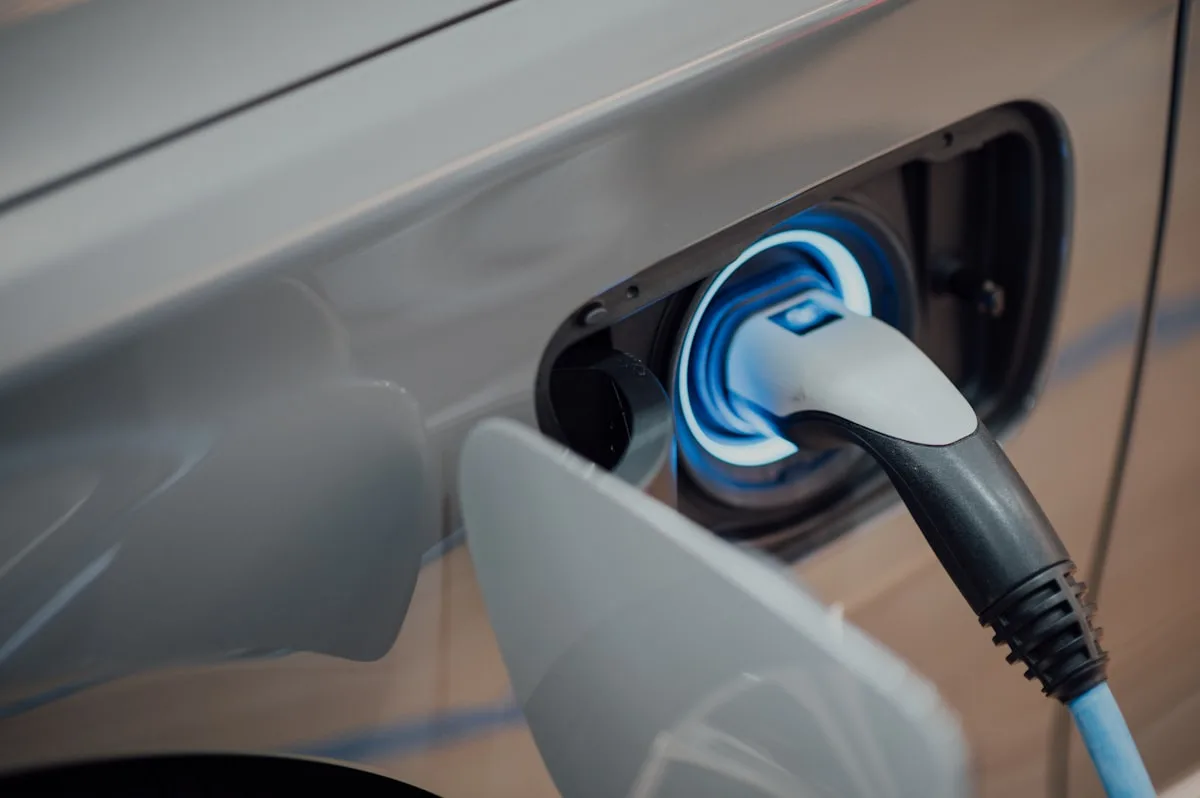
If you open a bestselling electric vehicle sold in 2024–2026, the battery is almost certainly a liquid-electrolyte lithium-ion pack: cells wired into modules or glued into a cell-to-pack architecture, managed by a battery management system that balances state of charge, temperature, and fast-charge limits. The cathode is likely lithium iron phosphate (LFP)—cheap, durable, thermally forgiving—or a nickel-rich layered oxide (NMC/NCA family) chasing higher specific energy for long highway range. The anode is still overwhelmingly graphite, sometimes with a small percentage of silicon blended in to raise capacity without blowing up volume expansion budgets. That industrial stack is not exotic; it is the commercial baseline this article will compare against everything else.
Energy density is the headline number consumers see, but engineers trade it against cycle life, fast-charge, cold-weather loss, safety, and $/kWh. Today’s mass-market packs typically land in the ballpark of roughly 150–170 Wh/kg at pack level for competent LFP designs and higher for premium nickel-chemistry packs—exact figures vary by vehicle class, thermal system, and structural integration. What matters for comparison is order of magnitude: commercial tech is mature, audited for automotive warranty cycles, and scaled to gigafactory throughput.
The research frontier that gets conference headlines is solid-state batteries (SSBs): cells where a ceramic, sulfide, halide, or composite electrolyte replaces most liquid, promising better dendrite resistance (not magic, but a different failure physics) and compatibility with thinner separators or lithium-metal or high-silicon anodes in some architectures. A 2025–2026 thread in peer-reviewed literature focuses on silicon anodes paired with solid electrolytes—silicon’s theoretical capacity dwarfs graphite, but expansion and interfacial side reactions have historically killed calendar life. Recent work reports interface engineering strategies that push Coulombic efficiency and cycle counts in laboratory cells; one Nature Communications paper describes surface halogenation-style engineering to stabilise silicon against a solid electrolyte. Another reports a silicon-based all-solid-state concept emphasising operation with less dependence on extreme external stack pressure—a practical requirement because clamping force costs money and weight in a module.
Compare that to what you can buy: no major OEM has yet shipped million-unit SSB passenger packs with lithium-metal anodes at price parity with LFP. Pilots, demos, and supplier roadmaps exist; yield, dry-room handling (especially for sulfide electrolytes), and recycling pathways remain gating items. Lab Wh/kg on coin or single-layer cells rarely survives unchanged after scaling, pressure, and temperature gradients in a 120 kWh pack.
Sodium-ion is the other frequent ‘what’s next’ story. Sodium is abundant and avoids some lithium price spikes, but energy density and anode strategies differ: hard carbon anodes and anode-free concepts trade simplicity for plating control. Academic 2025–2026 papers explore anode-free solid-state sodium roadmaps and interphases that stabilise sodium plating at high rate and sub-zero temperatures—useful for science, still distant from the 10-year automotive defect targets. Commercially, regional cell makers have announced sodium products aimed at budget EVs and stationary storage; buyers should treat range and pack mass claims as model-specific until independent pack tests circulate. Relative to today’s lithium-ion EV, sodium’s role in 2026 is niche or emerging, not dominant.
On the cathode side, the quiet commercial shift is manganese-heavy phosphate chemistry—often discussed as LMFP or Mn-doped LFP variants—sitting between plain LFP and high-nickel on the voltage–cost–density frontier. Industry trackers note rapid ramp of LMFP material tonnage compared with a few years ago, with automakers sourcing blends for volume models. This is incremental innovation: same factory footprints as phosphate lines, faster than solid-state revolution, easier to qualify than totally new electrolytes.
Manufacturing innovation in today’s plants matters as much as chemistry. Large-format cylindrical cells (e.g. 46xx families), dry electrode coating where process windows are proven, faster formation, and in-line inspection all shave $/kWh without changing the periodic table. Those gains stack with LMFP or silicon-blend anodes—5–15% here and there compounds across millions of vehicles.
A fair comparison table in prose: Commercial 2026 EV equals liquid Li-ion, graphite/Si-blend anode, LFP or NMC/NCA cathode, proven BMS and thermal loops, warranty-qualified cycles. Lab SSB + silicon equals potential Wh/kg upside and safety story, unproven at gigascale cost. Sodium-ion equals cost and supply narrative, catching up on density and vehicle deployment. LMFP equals near-term LFP++ on existing supply chains.
For climate and policy readers, chemistry hype should not distract from grid carbon intensity and vehicle efficiency: a modest pack on a efficient platform beats a miracle cell stuck in a heavy truck charged on coal every time. The lifecycle story you may have read elsewhere—manufacturing emissions higher for big packs but paid back in tens of thousands of kilometres on average grids—still applies whichever chemistry wins.
Second-life and recycling economics also tilt toward chemistries that reuse nickel, cobalt, and lithium at scale today: hydromet and pyro routes are capital-intensive but already financed around NMC streams, whereas sulfide solid electrolytes may need new hazard handling and waste classes before 2030 megatonnes hit shredders. Regulators in 2025–2026 increasingly ask for passport-style traceability—another hidden 18- to 36-month drag on novel stacks that never appears on a lab slide.
Newsorga will update this survey when major OEMs publish independent solid-state safety data at pack scale or when sodium passenger packs clear global homologation in volume—whichever comes first.