What is confirmed
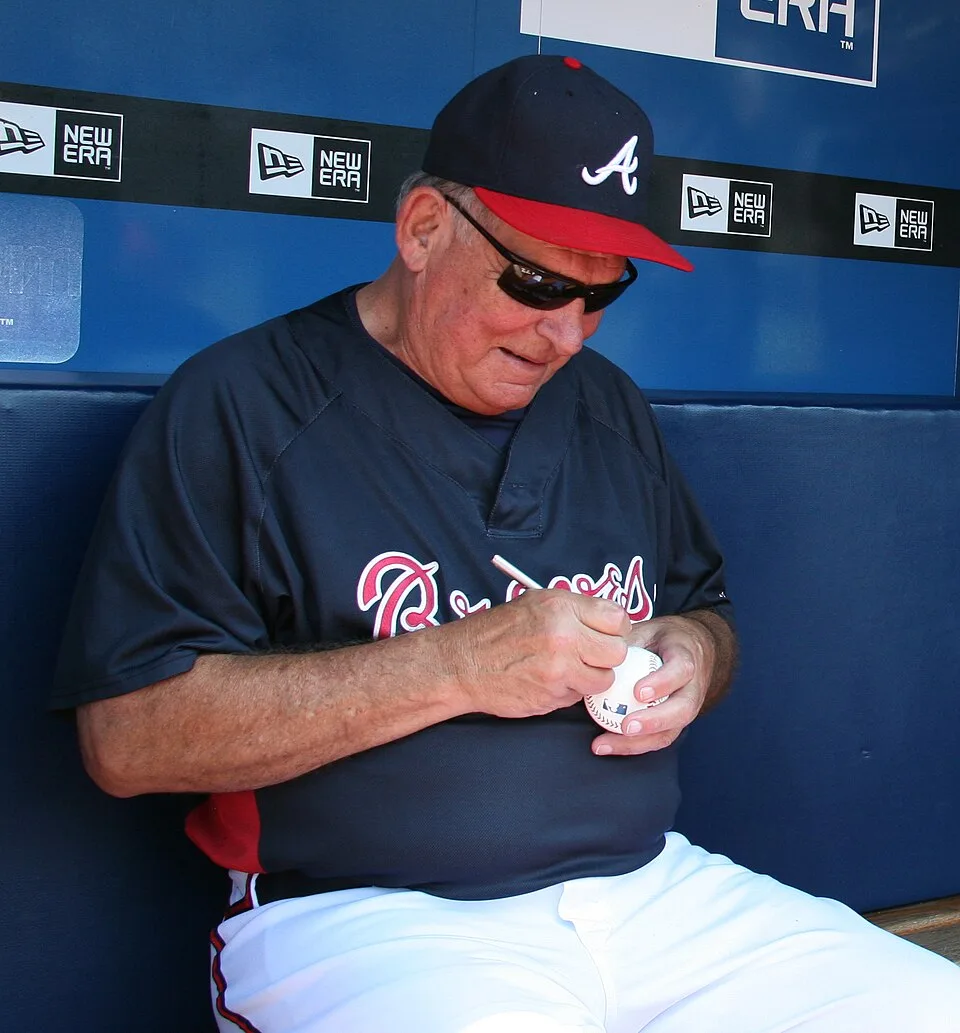
Robert Joe “Bobby” Cox, the Hall of Fame manager most identified with the Atlanta Braves, died on May 9, 2026, at age 84, according to the National Baseball Hall of Fame and multiple news outlets carrying the Atlanta Braves’ announcement. The Hall’s online biography was updated with a top-line notice that he passed away May 9; it also lists Marietta, Georgia in his death field alongside the year 2026.
Cause of death: what was announced
Some early aggregators ran headlines asking for a single clinical cause; several desks noted the Braves’ public statement on his death did not immediately spell out a formal medical cause on the day of the announcement.
Wire copy syndicated widely—including Associated Press reports echoed across national desks—placed his passing in Marietta and reminded readers he had a stroke in 2019 and heart issues that complicated his recovery, context that explains long-term frailty without by itself substituting for an official death certificate or coroner finding. His wife had publicly described heart trouble slowing stroke recovery in earlier interviews summarized in the same reporting chain.
Newsorga will not label one tidy diagnosis (for example a named cardiac syndrome) unless a primary family, club, or medical-office statement publishes it verbatim—social summaries and SEO-chasing “cause of death” posts often outrun verification.
How the Braves framed the loss
In reporting that quotes the club directly, WFAN (Audacy) said the Braves confirmed Cox’s death and published a team statement calling him their “treasured skipper” and “the best manager to ever wear a Braves uniform.” The same paraphrased reporting ties him to 14 straight division titles, five National League pennants, and the 1995 World Series championship—the franchise’s breakthrough title in that era.
That language matters for readers who only know Cox from highlights: the Braves are not describing a caretaker manager; they are asserting institutional identity. When a team retires a number—Atlanta retired No. 6 for Cox in 2011—it is a signal that the person is part of the franchise’s public memory the same way a flag on a pole is: fixed, visible, hard to take down.
The numbers that travel in every obituary
Across Hall of Fame materials and standard references, Cox is credited with 2,504 career managerial wins against 2,001 losses in 4,508 games, a .556 winning percentage—numbers the Hall publishes in its “career at a glance” block. That win total has routinely been described as fourth on MLB’s all-time managerial wins list, which is the kind of statistic wire services repeat because it scales for readers who do not follow the NL East daily.
With Atlanta specifically, the Hall summarizes 2,149 wins as Braves manager—his dominant share of the career total—spanning his first stint (1978–1981) and the 1990–2010 run that included the 1990s dynasty. He also managed Toronto from 1982–1985, including an AL East title in 1985, which matters because it shows the “Braves icon” was already a proven big-league skipper before he returned to Atlanta as general manager and later took the dugout again.
The 1995 title and the decade around it
Cox’s second Atlanta tenure is the chapter casual fans know from cable television and October baseball: Greg Maddux, Tom Glavine, and John Smoltz as the rotation spine; repeated NL pennants; and the 1995 championship that broke a long championship drought for the city in major North American team sports. The Hall’s biography names five pennants in that broader run (1991, 1992, 1995, 1996, 1999), with 1994 correctly absent for the canceled postseason.
Explaining “14 straight division titles” in plain terms: from 1991 through 2005, Atlanta finished first in its division every full season except 1994, when a players’ strike halted the year—so sportswriters still treat the streak as fourteen in a row because 1994 is treated as a gap rather than a “second-place finish.” If you are new to baseball, think of it as a company hitting its sales target every fiscal year for a decade and a half, with one year where the books were never closed.
Player, coach, and the Yankee footnote
Before the dugout jacket, Cox reached the majors as a Yankees infielder in 1968–1969, playing third base in an era when New York was still Mickey Mantle’s team. WFAN’s recap notes Cox’s own modest joke that being Mantle’s teammate was his “only claim to fame” as a player—a useful detail because it humanizes a man later remembered as a stern, fatherly dugout presence.
He moved into managing in the Yankees’ farm system, then served as Billy Martin’s bench coach during New York’s 1977 World Series championship season. That coaching credit is easy to skip when you are writing a Braves headline, but it explains why New York outlets also own a slice of the obituary real estate: Cox was a baseball lifer before he was a Georgia icon.
Ejections, personality, and what players said
Cox’s temper is part of his statistical line: the Hall quotes umpire Bob Davidson acknowledging he threw Davidson out multiple times, and Hall copy states Cox holds the big league record with 158 ejections—the kind of number that sounds funny until you remember each one is a manager betting credibility on a call he thought could change a game.
The Hall also preserves player testimony that is less about tactics and more about culture: Tom Glavine calling Cox a fatherly influence on professionalism, and John Smoltz saying long tenure with Cox “changes your life.” Those quotes do not replace game charts; they explain why teams sometimes keep a manager through slumps: trust compounds like interest if the clubhouse believes the leader is fair.
Health and public life after 2010
Cox retired from managing after the 2010 season. In later years, outlets reported he had suffered a stroke and made limited public appearances; WFAN’s May 9 recap notes that pattern and references an August 2025 ballpark appearance tied to a 1995 anniversary celebration—useful context for readers asking whether he had been visible lately.
We are labeling stroke history as widely reported background, not as the mechanism of his death on May 9, unless a primary source ties those facts together explicitly. The distinction matters for accuracy and for families who read obituaries for clarity, not noise.
Hall of Fame and the 2014 class
Cox was elected to the Hall in 2014—the same year Greg Maddux and Tom Glavine went in as pitchers, a class that reads like a 1990s Braves reunion photo. Induction cemented a manager’s case that can be unfairly abstracted as “anyone could win with those arms,” a claim baseball historians argue against by pointing to in-game bullpen decisions, clubhouse steadiness across losing months, and postseason travel grind.
For readers who treat the Hall as a museum label: induction is not a moral judgment; it is a career summary with a high bar. Cox clearing it unanimously in the committee process (the Hall page lists 100% on his vote line) signals peers and historians saw his résumé as complete, not padded.
Why this story still matters in 2026
Modern baseball is louder about analytics, pitch clocks, and regional sports network economics, but the manager’s job is still fundamentally human resource management under television lights. Cox’s career is a case study in long-horizon leadership: develop players, survive ownership changes, keep standards steady when Twitter (or its successors) overreacts to a three-game skid.
When a figure like Cox dies, the sport also loses a living bridge to pre-internet clubhouse culture—not because that era was better, but because firsthand memory is how tactics and temperaments get transmitted. Museums, books, and film preserve some of it; obituaries are the first draft of that handoff.
Bottom line
Confirmed: Bobby Cox died May 9, 2026, at 84, with the Hall of Fame and the Braves’ public statement (via outlets including WFAN/Audacy) anchoring the news. He managed Atlanta across 25 seasons in two stints, won 2,504 games overall, and managed the 1995 World Series champion Braves.
For anything beyond that—private medical detail, funeral plans, league-wide tributes not yet published—check official Braves and MLB channels and the Hall page as they update, rather than trusting screenshot chains or unnamed social posts.