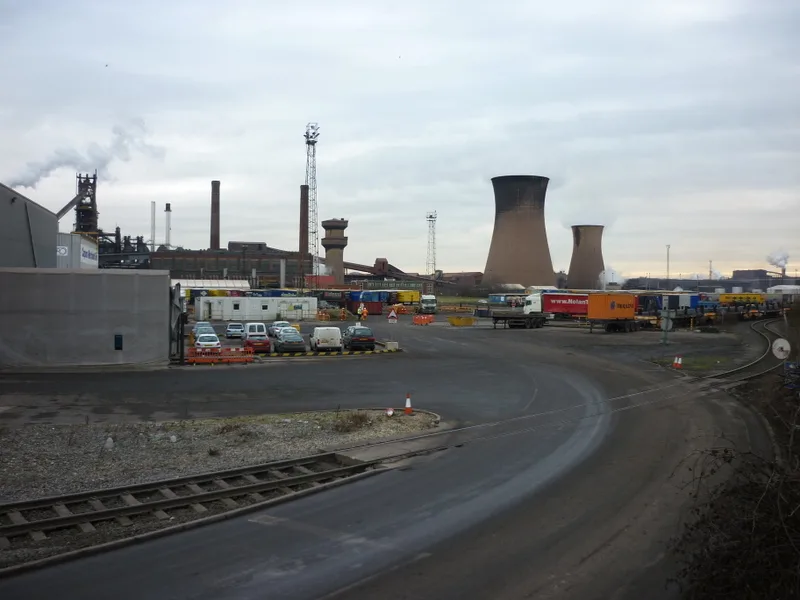
British Steel is heading back to the British state. Prime Minister Sir Keir Starmer announced on Monday, May 11, 2026 that legislation will be brought forward this week to give the UK government the power — subject to a public-interest test — to take full national public ownership of the country's last virgin steelmaker. If the bill passes, it will be the first time British Steel sits in government hands since its 1988 privatisation under the Margaret Thatcher administration.
The verbatim Starmer line, delivered in his Monday reset speech and reported by Moneycontrol and The Times: "Legislation will be brought forward this week to give the government powers... to take full national ownership of British Steel." A simultaneous government statement confirmed the substance, explaining that "it has not been possible to agree a commercial sale with the current owner" and that "the government believes introducing legislation to provide a route to public ownership is the appropriate next step." The public-interest test caveat is the legal hook that brings the move within UK and WTO state-aid jurisprudence rather than around it.
This is the news. The why and the how are where it gets structurally significant.
The 13-month halfway house
British Steel has been in a 'halfway house' since April 12, 2025. That was the day the House of Commons sat on a Saturday — only the sixth time the UK legislature had done so since the end of the Second World War — to enact The Steel Industry (Special Measures) Act, the emergency law that handed operational control of the Scunthorpe plant to the UK state.
The trigger event, per the government's public account: the Chinese parent Jingye Group, which had acquired British Steel out of bankruptcy in March 2020, was attempting to unilaterally shut down the blast furnaces. There was a physical fracas at Scunthorpe between Chinese representatives and British Steel staff. Police were called. In parallel, the Royal Navy was put on alert to track sea-based shipments of coking coal bound for Scunthorpe, on the fear that Jingye would attempt to divert them overseas to starve the plant.
Newsorga's read on that 48-hour window in April 2025: it was the closest the UK has come, in peacetime since the 1970s, to an outright industrial-sovereignty crisis. The emergency law solved the operational problem — the government ran the plant from that day onward — but left a fundamental structural defect intact: Jingye retained the economic ownership (the shareholding) while the UK state held the day-to-day operational keys.
That arrangement is what is being unwound this week.
Why a commercial deal failed
Compensation negotiations between the government and Jingye have run continuously since the 2025 takeover. The headline numbers, sourced through The Times and Mirror:
- Jingye at one point demanded more than £1 billion from the UK government for its stake.
- The stake itself was a bargaining chip in parallel UK-China diplomatic talks, including over the Chinese 'super-embassy' site in London — which Starmer approved in January 2026 ahead of his first prime-ministerial visit to Beijing in eight years.
- In March 2026, the UK offered Jingye a package "worth tens of millions of pounds" — reported separately as around £100 million — in exchange for full economic control of the business.
- Jingye rejected the offer.
The gap was roughly an order of magnitude. With Jingye unwilling to come down and the UK government unwilling to pay close to £1 billion for an asset it already controlled operationally, the deal space collapsed. Hence the government statement on Monday: "It has not been possible to agree a commercial sale with the current owner."
Newsorga's read: the public-interest-test route now being used is, in legal substance, a compulsory acquisition with compensation set by statute or by a state-aid review process rather than by free negotiation. Jingye will almost certainly contest the compensation level in some forum — possibly the High Court under UK judicial-review doctrine, possibly through a Chinese state-channel intervention — but its ability to block the acquisition itself is now effectively zero. The political-diplomatic price for the UK is contained because the super-embassy approval was sequenced before this move.
The operational case for moving now
The Scunthorpe plant, whose works date to Victorian times, is the United Kingdom's last remaining virgin-steel production site — i.e., the last place in the UK that can make iron and then steel from raw materials by combining iron ore with coking coal in a blast furnace, rather than recycling scrap in an electric arc furnace. Three operational facts make the halfway-house arrangement untenable:
1. The plant is bleeding money daily. UK taxpayers have been carrying losses "of more than £1 million a day" at Scunthorpe since the 2025 takeover (per The Times), with a per-day operating-cost estimate of around £1.3 million (per BBC). Cumulative cost to the taxpayer had reached approximately £377 million by late January 2026, with the projected total exceeding £1.5 billion by 2028 if the structure was not changed.
2. One of the two blast furnaces is already idled. The blast furnace called Queen Anne — known on-site as 'Annie' — has not been in production since the start of April 2026. Maintenance work is expected to take another two weeks. British Steel customers are facing delivery delays.
3. Modernisation is impossible under the current ownership structure. The cleaner-emissions path forward for Scunthorpe is a switch from blast furnaces to electric arc furnaces (EAFs), which produce steel from scrap at a far lower carbon footprint. Newsorga's view: this is the part of the story that matters most for the net-zero policy framework. The EAF transition is impossible to greenlight while the economic owner of the asset is a Chinese parent that the UK government is in compensation litigation with. The Times has separately reported a planned £2 billion taxpayer-backed mill at the Scunthorpe works — only deliverable once ownership is consolidated.
Headcount and regional politics
Scunthorpe directly employs between 2,700 and 3,500 workers, depending on which roll is counted (the BBC uses 2,700; industry bodies and the business-live wire put it higher). The downstream supply chain — coking-coal logistics, rail freight, finished-steel transport, Teesside processing — adds several thousand more.
The political geography is important. Scunthorpe is a Labour seat held by Sir Nic Dakin; the constituency was one of the 'Red Wall' seats that swung to the Conservatives in 2019 before swinging back. The local GMB and Unite trade-union branches have been the loudest voices for full nationalisation; their support has been a key piece of the political coalition that has made the policy possible. Newsorga's read: from Starmer's perspective, this is the rare announcement that simultaneously feeds the post-May-7-election internal-Labour reset and the unions, and the industrial-strategy framing of the next EU-summit pitch.
The 1988 marker
The historical line under all of this: British Steel Corporation was the state-owned successor to the 1967 nationalisation of the UK steel industry. The Thatcher government privatised it in December 1988 at an IPO price of £1.25 per share, valuing the company at roughly £2.5 billion. The privatised entity merged with the Dutch Koninklijke Hoogovens in 1999 to form Corus, which was acquired by India's Tata Steel in 2007. The current British Steel entity is the rump that Tata spun out and sold to Greybull Capital in 2016, before passing through administration to Jingye in March 2020.
Newsorga's frame: returning British Steel to state ownership in 2026 does not exactly undo 1988 — the Tata-Port-Talbot asset, for instance, remains private. But it does close a 38-year arc on the privatisation of the integrated UK steel sector. Strong nations in a world like this need to make steel was the Starmer framing on Monday. That sentence is not coded as Old Labour nostalgia. It is coded as 2020s industrial sovereignty: same conclusion, very different motivating premise.
How the legislation likely works
The bill that Starmer has promised this week, on the available reporting from The Times, is being drafted in the business department as a public-ownership-route statute conditional on a public-interest test. Newsorga's structural read of how that will operate:
- The bill grants ministers a discretionary power to acquire full economic control of British Steel if the public-interest test is met.
- The public-interest test is the UK's post-EU equivalent of the state-aid review and is expected to cite national security (steel as a sovereign-defence input), energy transition (the EAF plan), and regional employment as the qualifying public interests.
- Compensation to Jingye is set inside the legislation, almost certainly with reference to a statutory formula or an independent valuation, not by negotiation. The Times reporting flags that it is unclear whether the draft envisages compensating Jingye for its stake at all.
- The bill is expected to pass the Commons comfortably — Labour still holds a substantial majority. The Conservative opposition and Reform UK will have to choose whether to vote against on free-market principle, and Newsorga expects most of the Conservative vote against, but with audible defections from Red Wall members.
- An announcement in the King's Speech is the original plan flagged by The Times for Wednesday of this week; Starmer's Monday speech functions as a political pre-announce that pre-empts that timetable.
Three things to watch
1. The Jingye response. Beijing has political and commercial reasons to fight the compensation level but limited leverage to fight the takeover itself. Newsorga's view: expect a forceful diplomatic protest at the Chinese Ministry of Commerce level, possibly some retaliatory action against UK investors in China, but no formal escalation. The Chinese super-embassy approval in London in January was not coincidentally sequenced before this move.
2. The EAF transition timeline. Public ownership unlocks the £2 billion electric arc furnace investment. The question is when. Newsorga is watching for two milestones: a business-department green paper on the EAF roll-out, and a Treasury sign-off on the multi-year capital envelope — without which the EAF investment becomes another announcement-without-funding.
3. The cost-to-taxpayer disclosure. The current losses are running at >£1 million a day. Permanent public ownership crystallises those losses on the government balance sheet rather than treating them as a one-off rescue cost. The Office for Budget Responsibility will need to incorporate this into the Autumn 2026 fiscal forecast, which interacts directly with the gilt-market stress that Newsorga has been covering separately. Markets will want a clear path to break-even — most plausibly through the EAF switch combined with carbon-border-adjustment tariff protection against subsidised Chinese and Indian imports.
Bottom line. The announcement closes the operational uncertainty that has hung over Scunthorpe since April 2025 and removes a structural blocker on the EAF transition. It does not by itself solve the cost problem, the international-trade problem, or the Jingye-compensation problem. Newsorga will be tracking the bill's first reading later this week as the next concrete data point.