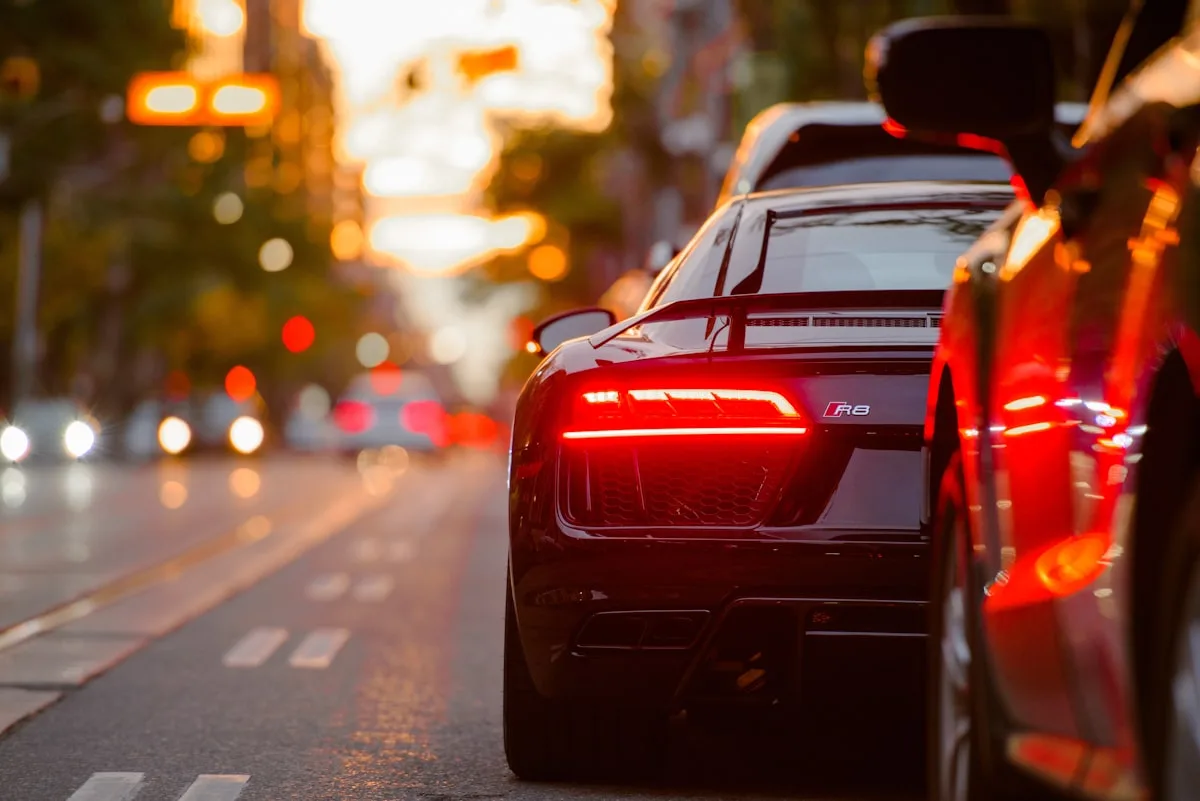
The Hyundai Ioniq 6 N is the battery-electric performance flagship of the swoopy Ioniq 6 sedan line, aimed at drivers who want track-style controls, dual-motor all-wheel drive, and fast DC charging in one four-door package.
Model-year names and incentives vary by country into 2026 and 2027, so this guide anchors numbers to Hyundai’s published specification sheet and regional consumer sites, then lists what to verify locally before you place a deposit.
Hyundai Motor Company stated in its global newsroom on 1 April 2026 that the Ioniq 6 N had won the 2026 World Performance Car title at the World Car Awards programme in New York, which helps explain why the model is being positioned as a halo product rather than a high-volume commuter.
Verified performance and range (manufacturer sheet)
Hyundai’s Australian-market IONIQ 6 N specification sheet lists combined maximum power of 448 kW, rising to 478 kW when N Grin Boost is active, with combined torque of 740 Nm or 770 Nm with the same boost mode.
The document quotes a 0–100 km/h time of 3.4 seconds, or 3.2 seconds with N Launch Control engaged, a top speed of 257 km/h, and a WLTP all-electric driving range of 487 km alongside combined consumption of 18.7 kWh per 100 km.
Hyundai USA’s consumer page for the 2026 IONIQ 6 N describes the car in metadata as a 641 hp high-performance electric sedan, which aligns with the boosted kilowatt figure when converted using the same rounding Hyundai uses in American marketing.
| Figure (as published) | Value |
| --- | --- |
| Peak power (standard / N Grin Boost) | 448 kW / 478 kW |
| Peak torque (standard / N Grin Boost) | 740 Nm / 770 Nm |
| 0–100 km/h (standard / N Launch Control) | 3.4 s / 3.2 s |
| Top speed | 257 km/h |
| WLTP range | 487 km |
| Battery gross capacity | 84.0 kWh |
| Tare mass (example line) | 2,201 kg |
Battery, charging, and day-to-day usability
The same specification sheet lists an 84.0 kWh liquid-cooled lithium-ion pack, 400 / 800 V DC charger compatibility, and an on-board AC charging limit of 10.5 kW.
For DC charging, Hyundai quotes roughly 18 minutes from 10% to 80% state of charge at 350 kW, and about 81 minutes over the same window at 50 kW; a full 10–100% AC charge is quoted at about 11 hours 24 minutes on a 7.4 kW supply.
Vehicle-to-load output is listed at up to 250 V and 16 A with an interior domestic-style plug, which matters if you plan to run appliances or support another EV slowly from the pack.
Hardware that defines the driving experience
Braking hardware on the published sheet includes 400 mm by 34 mm ventilated front discs with four-piston monobloc calipers and 360 mm by 20 mm ventilated rear discs, plus an electronic limited-slip differential on the rear axle.
Forged 20 x 9.5J wheels wear 275/35R20 Pirelli P Zero tyres, and electronically controlled dampers, multi-link rear suspension, and a 0.274 drag coefficient appear alongside N-specific software such as N e-Shift, N Active Sound+, N Torque Distribution with up to 100% drive force sent to either axle, N Drift Optimiser, N Race with sprint and endurance modes, and N Battery Preconditioning for drag or track use.
Hyundai Australia’s consumer pages add marketing detail such as a large rear wing that is claimed to deliver up to about 100 kg of downforce at top speed and a body that is about 60 mm wider with a wheelbase stretched about 15 mm versus non-N Ioniq 6 variants, which buyers should treat as positioning copy unless duplicated on their own market’s technical PDF.
Pricing and availability: what to expect in 2026–2027
Hyundai USA states plainly that the 2026 IONIQ 6 N will reach the market with extremely limited availability at select dealers, which usually translates to small allocations, possible mark-ups, and little room to negotiate compared with mass-market trims.
The U.S. consumer site did not publish a starting MSRP in the static HTML that accompanies the model overview, so American shoppers should use Hyundai’s build-and-price workflow or dealer quotes for a binding figure that includes freight, options, and any tariffs or incentives that apply at delivery time.
Australian and European buyers should mirror that process on Hyundai’s local websites; regional taxes, luxury-car levies, and homologation equipment can shift the bottom line even when the underlying battery and motor hardware stay the same.
Who should buy it—and who should pass
Buyers who regularly track a car, want granular control of torque split and drift aids, and accept shorter real-world range when using boost modes will get the most from the Ioniq 6 N’s engineering budget.
Shoppers who mainly need maximum miles per dollar, a soft ride, or guaranteed purchase incentives may be better served by a non-N Ioniq or a different segment entirely, especially in markets where the standard Ioniq 6 remains on sale alongside the N.
Anyone comparing this sedan with the Ioniq 5 N or rival performance EVs should line up identical test conditions: battery state of charge, tyre compound and wear, ambient temperature, and whether N Grin Boost or launch control were used for headline acceleration claims.
Cross-check before you sign
Confirm final EPA, WLTP, or local labelling for range and efficiency, because certification labels—not website summaries—determine what appears on the window sticker or registration paperwork.
Ask the dealer to document software version, included charging hardware, and warranty terms for high-stress track use, since repeated thermal loading can interact differently with regional warranty language.
Revisit Hyundai’s technical PDFs and press releases if you are ordering a 2027 model year badge, because small calibration or equipment changes sometimes arrive at mid-cycle updates without a full media relaunch.