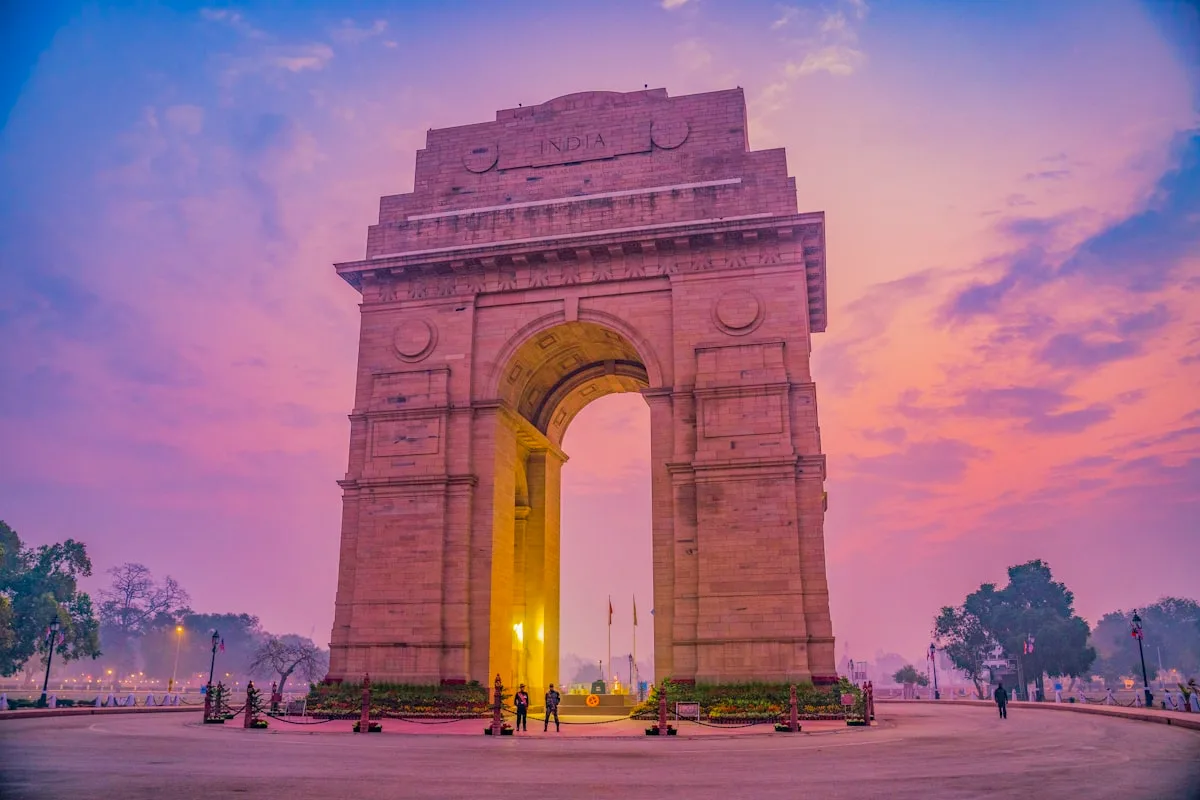
Iran has signalled to New Delhi that Foreign Minister Seyed Abbas Araghchi's attendance at next week's BRICS Foreign Ministers' Meeting is "on the foreign minister's agenda at this stage," the Times of India reported on its May 10 and May 11 editions, citing senior Indian government sources familiar with the bilateral correspondence. The two-day meeting will take place on May 14-15, 2026 in New Delhi, chaired by External Affairs Minister S. Jaishankar under India's 2026 BRICS presidency, and is set to be one of the highest-stakes gatherings of the 11-member grouping since its 2024 expansion — with the West Asia conflict, the closure of the Strait of Hormuz, and a 14-point US peace proposal currently under study in Tehran all on the table.
But the picture from the most recent Indian reporting is more equivocal than the Times of India headline suggests. The Print reported on May 7, 2026 that Araghchi is unlikely to attend in person and that Deputy Foreign Minister Kazem Gharibabadi is expected to lead the Iranian delegation; the Economic Times confirmed on May 11, 2026 that Gharibabadi will attend the BRICS Sherpa meeting this week and "may also represent his country at the meeting of foreign ministers if Araghchi is unable to attend." Tehran has not, as of Monday morning, officially confirmed Araghchi's presence with New Delhi.
Why the ambiguity
The reason the Iranian position has remained deliberately open is the fragility of the US-Iran ceasefire. Araghchi's participation, the Times of India writes, is contingent on whether the truce holds — "another military flare-up may drastically alter the situation." The conflict, which ran for roughly forty days between February 28 and April 8, 2026 before settling into a ceasefire, has not produced a permanent settlement, and the United Arab Emirates earlier this week accused Iran of launching 19 missiles and drones at its territory in violation of the truce — a charge Tehran has denied, saying its operations targeted only American assets in the region. Either side of that argument escalating between now and Thursday would, Indian officials acknowledge privately, immediately pull Araghchi back from the Delhi trip.
There is a second, longer-running consideration. Tehran is currently studying a 14-point US peace proposal, routed via Pakistan, that asks for a halt to Iran's uranium enrichment programme for at least 12 years in exchange for the gradual lifting of US sanctions. Iran's decision on whether to formally engage with that proposal — and whether Araghchi can credibly attend a multilateral meeting where the US posture toward Tehran is one of the central topics — has not been publicly resolved. Araghchi himself travelled to Beijing on Wednesday, May 6, in his first trip there since hostilities began, suggesting that Tehran's near-term diplomatic priorities are running through Beijing rather than Delhi.
Why India still wants him in the room
India's preference is clear from the bilateral track that is being prepared alongside the BRICS meeting. According to the Economic Times, India and Iran will use the Sherpa and foreign ministers' meetings to hold talks on the safe passage of Indian-flagged tankers through the Strait of Hormuz, where roughly 40 to 50 India-bound ships have been trapped west of the strait since the conflict began. Foreign Ministry spokesperson Randhir Jaiswal told reporters last week that 11 Indian ships have so far been able to exit the strait following diplomatic engagement with Tehran, and that 13 ships remain in the Persian Gulf awaiting clearance to transit.
The numbers behind the Indian concern are material. The Economic Times notes that about 40% of India's crude oil imports and about 90% of its LPG imports normally pass through the Strait of Hormuz — a structural dependence comparable in scale to Japan's prior-to-war Middle East exposure, and one that has not been resolved by the ceasefire. New Delhi has consistently preferred diplomatic engagement with Tehran over participation in any US-led military coalition to forcibly secure the strait, and the bilateral talks with Gharibabadi — whether or not Araghchi is in the room — are the most concrete chance the Indian Ministry of External Affairs has had since the war began to push on the trapped-tanker problem at a senior level.
Who's coming, and who's not
India sent invitations to all 11 BRICS member-state foreign ministers, and The Print's May 7 reporting maps the expected level of attendance with unusual precision:
FM-level attendance (six countries): Brazil, Russia (Sergei Lavrov, confirmed weeks ago through NDTV and Firstpost), Indonesia, South Africa, Egypt and Ethiopia.
Deputy/senior-official level attendance (five countries): China (one of its Deputy Foreign Ministers; Wang Yi is missing the meeting because his presence is required at the upcoming Trump-Xi summit in Beijing), Iran (Deputy FM Kazem Gharibabadi if Araghchi does not travel), Saudi Arabia (a senior official level, not the foreign minister), United Arab Emirates (Reem Al-Hashimy, the UAE's Minister of State for International Cooperation), and the host India itself at deputy-level for the technical Sherpa track.
Among partner countries of BRICS — a group of 10 invited states including Belarus, Bolivia, Cuba, Kazakhstan, Malaysia, Nigeria, Thailand, Uganda, Uzbekistan and Vietnam — high-level delegations are expected to attend in observer roles.
The Iran-UAE deadlock
The single most-watched diplomatic moment of the May 14-15 meeting will be the first face-to-face encounter between Iranian and Emirati senior officials since the war began, and — if the Saudi delegation is at minister or deputy-minister level — a parallel Iran-Saudi encounter as well. The BRICS grouping has been deadlocked on a joint statement about the West Asia conflict since the war broke out, with Iran and the UAE representing opposing sides of the conflict and refusing to sign any communiqué that does not reflect their respective positions.
The deadlock has already produced one failed multilateral attempt at consensus. India chaired a BRICS Special Representatives meeting on West Asia and North Africa (MENA) in New Delhi last month, and that meeting ended without a joint declaration — only a Chair's statement in which India noted that "various members" of the grouping had expressed "deep concern" about the situation. Government sources quoted in the Times of India were blunt about why: efforts by India and others to bridge the Iran-UAE gap "were not successful." Both Tehran and Abu Dhabi have, in the run-up to the FMs' meeting, pushed New Delhi for favourable language — Araghchi and President Masoud Pezeshkian publicly urging India to work toward a consensus statement against US-Israel actions in West Asia, while the UAE has held the opposing position.
India's position is calibrated. Ties with the UAE remain a top priority, the Times of India reports, and Prime Minister Narendra Modi is expected to make a brief stopover in Abu Dhabi on Friday, May 15 — the second day of the FMs' meeting — for a meeting with President Mohamed bin Zayed Al Nahyan on his way to Europe. The Modi-MBZ meeting is the bilateral counterweight to the BRICS multilateral track and underlines that New Delhi is not willing to lose the Emirati relationship as the price of an Iran-aligned BRICS statement.
What India hopes to do with the chair's gavel
India is using its 2026 BRICS presidency under the working theme "Building for Resilience, Innovation, Cooperation and Sustainability" to position itself as a "bridge-builder" between the West and the Global South, Firstpost reported. The May 14-15 FMs' meeting is a staging post for the 18th BRICS Summit, which New Delhi is expected to host on September 9-10, 2026, and the entire 2026 BRICS programme — including the MENA SR meeting, the Sherpa track and the September summit itself — is being run from a dedicated government portal at brics2026.gov.in.
The agenda for the FMs' meeting itself, beyond the West Asia consultations, will include: (a) global governance reform — particularly UN Security Council restructuring, where India, Brazil and South Africa have long-standing aligned positions; (b) the New Development Bank, the 2015-established BRICS lender for infrastructure and sustainable-development projects; (c) trade and currency-settlement frameworks in the wake of US sanctions pressure on member states; and (d) climate and energy security, which for India has the practical near-term meaning of Caspian and Russian crude diversification away from the Strait of Hormuz.
Background: Iran's BRICS membership
Iran was admitted to BRICS along with Egypt, Ethiopia, Saudi Arabia and the United Arab Emirates at the 2023 Johannesburg Summit, with the expanded membership taking effect from 1 January 2024. Argentina, also invited in 2023, declined to join after the Javier Milei government took office. Indonesia subsequently joined in early 2025, bringing the membership to its current 11. For Tehran, BRICS has become a central diplomatic platform: a multilateral grouping in which US sanctions are not the structural starting condition for engagement, and one whose NDB is a potential alternative source of project finance.
Both Araghchi and President Pezeshkian have publicly repeated, since the start of the war, that Iran attaches "great importance" to BRICS and views the grouping as a forum for coordinated response to US-Israel actions in West Asia. That public weight makes a physical no-show by the foreign minister at the May 14-15 meeting diplomatically costly for Tehran — which is why, despite The Print's reporting that he is unlikely to attend, the door has been kept open by Iranian officials describing the visit as "on the foreign minister's agenda at this stage" rather than ruled out.
What to watch through Thursday
Newsorga's short list of the next 72 hours:
(1) Whether the UAE-Iran ceasefire holds without further escalation in the Persian Gulf — any repeat of the alleged 19-missile incident from earlier this week likely cancels Araghchi's travel and may force the Iranian delegation down to a lower level than Gharibabadi.
(2) Whether Tehran's response to the 14-point US peace proposal, routed via Pakistan, is communicated before or after the Delhi meeting. A response before the meeting would let Araghchi travel from a position of clarified posture; a response delayed past May 15 keeps the Iranian delegation at deputy level.
(3) Whether Indian diplomacy with Tehran on the Hormuz transit produces a quantifiable second batch of cleared tankers — the 11 ships exited / 13 still trapped baseline is the metric MEA spokesperson Jaiswal has been quoting, and New Delhi will want to be able to report a number larger than 11 after the meeting.
(4) Whether India drafts a Chair's statement on West Asia that goes further than last month's MENA SR statement — or whether the Iran-UAE deadlock again produces only the "deep concern" language that has so far been the limit of consensus.
(5) The shape of the Modi-MBZ meeting in Abu Dhabi on Friday, May 15, which will be read in Tehran as a signal of how far India is willing to go to balance its BRICS-chair role against its Emirati strategic partnership.
For now, the simplest version of the next-week story is the one the Times of India put first: Iran's foreign minister may travel to Delhi, his visit is on his agenda, and his deputy will lead the delegation if he does not. The fuller version is that India's 2026 BRICS chairship is being tested, by the most divided membership the grouping has had since its 2024 expansion, against the single most-difficult conflict in the Global South's recent diplomatic memory — and the test runs from Thursday morning in New Delhi.