Why one guest list line became its own storyline
Long before Joseph Vijay became Chief Minister on 10 May 2026, Tamil audiences had rehearsed him as protagonist: arena-scale entries, applause choreography, moral monologues. Tamilaga Vettri Kazhagam (TVK)’s oath day at Jawaharlal Nehru Indoor Stadium therefore blended constitutional ritual with fan festival optics—delegations, microphones, governors’ protocols, and—in the same panoramic shots—figures from Kollywood VIP enclosures who signalled continuity between screen popularity and Chennai’s newest power centre.
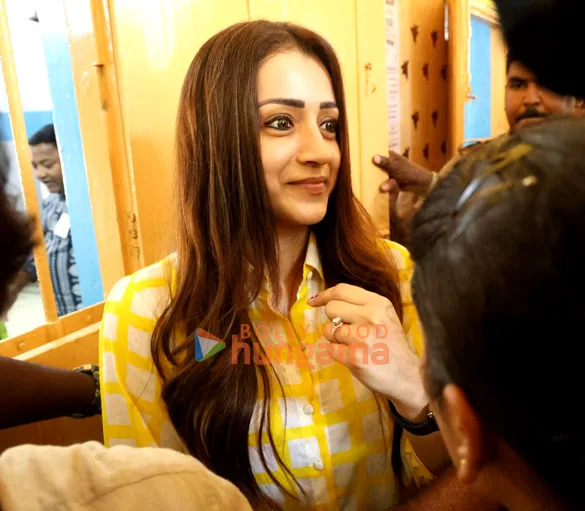
Among those names circulated most aggressively on social timelines was Trisha Krishnan: not a minister, not an MLA—yet unmistakably emblematic of the commercial-film electorate Vijay’s bloc mobilised alongside traditional party machinery. Coverage varied by outlet; consensus across live blogs was simpler: whenever the camera hunted the stands for recognisable celebrities, hers was a face commentators could shorthand without explanation.
The Ghilli shorthand and twenty-year friendship grammar
Journalists leaned on nostalgia for a simple reason—it economises exposition. Ghilli (2004), starring Vijay and Trisha under Dharani, remains a shorthand for boom-era mass comedy-action pairing: kinetic chase beats, heroine-with-agency arcs within the conventions of early-2000s star vehicles, and a soundtrack-era marketing rhythm that predates today’s streaming drops. To reference it in a political week is to tell readers, this relationship is older than your current smartphone OS.
That history matters analytically, not only sentimentally. TVK’s pitch in 2026 fused anti-corruption registers with fan-club logistics; when a co-star of Vijay’s peak commercial phase appears at the oath, it photographs as continuity—the same talent bench that sold tickets now witnesses a leader who must sell policy outcomes. Detractors read the same image as spectacle capture; supporters read it as cultural legitimacy.
What Trisha’s presence did—and did not—signify constitutionally
Nothing in a chief minister’s oath requires film guests; Governor Rajendra Vishwanath Arlekar’s formal act is between Vijay and the Constitution. Trisha’s attendance therefore carries zero legal weight and high semiotic weight: it signals which sections of the industry are comfortable showing up in plain sight versus which prefer distance now that ministries control permissions, subsidy rhetoric, cooperatives tied to exhibitors, and the tone of policing around mass gatherings.
Framing etiquette here is blunt: celebrities who appear at oath ceremonies donate borrowed halo—and accept borrowed suspicion. Opposition voices already primed to call TVK a vanity project gain an easy meme; backers gain proof that Vijay is not improvising governance from a bunker but retaining public ties his rivals cannot easily replicate.
Gendered optics on a testosterone-heavy political stage
Chief-minister investitures skew male in speech time, uniformed corps, and security choreography. Within that frame, a leading woman actor’s attendance becomes a subplot about representation rather than portfolios: who is allowed visibility without speaking, whose silence is interpreted as endorsement, whose wardrobe and seating row become debate proxies. Feminist commentators will split—some stressing agency (she chose her seat), others stressing risk (public figures become symbolic shields)—but neither camp will pretend the tableau is incidental.
Industry positioning after “actor becomes CM”
Tamil Nadu’s film economy is densely regulated in practice—shoot permissions, stunt sequences, hoarding politics during releases, sporadic clashes over dialogue deemed inflammatory. A chief minister who is simultaneously a marquee hero collapses insider–outsider distinctions for producers and stars alike. Presence at oath day communicates relational warmth without endorsing policy fine print; conspicuous absence communicates professional caution without joining an opposition slogan.
Trisha, with two decades-plus atop call sheets and brand endorsements, operates at a tier where reputational bookkeeping is granular: every public appearance is weighed against Gulf tour schedules, OTT première calendars, NGOs, and the permanent risk of boycott hashtags. Showing up beside Congress ally optics (Rahul Gandhi reportedly on the dais in contemporaneous Hindu reporting) and stadium-scale TVK colour is therefore a calibrated statement—more alliance-adjacent than party-enlisted.
Numbers that keep the spectacle honest
The oath happened under the shadow of arithmetic, not melodrama alone: assembly strength remains 234 seats; early reporting around TVK’s path to office referenced vote totals on the order of 1.7 crore votes within 4.9 crore polled, with a confidence vote deadline described for 13 May 2026. Celebrities can flood pixels; they cannot vote twice in the house. The useful entertainment-industry question is whether May 10’s emotional capital converts into May 13 procedural stability—where camera angles matter less than whips and walkouts.
Bottom line
Trisha Krishnan at Vijay’s May 2026 chief-ministerial oath is best read as public diplomacy between cinema and the state—not an appointment, not a portfolio, but a visible thread connecting Ghilli-era stardom to a week when Tamil Nadu experimented with breaking a DMK–AIADMK duopoly script. The story’s next act is not who stood for the national anthem on Sunday, but who returns for budget debates when the cinema crowd goes home and the LED screens go dark.