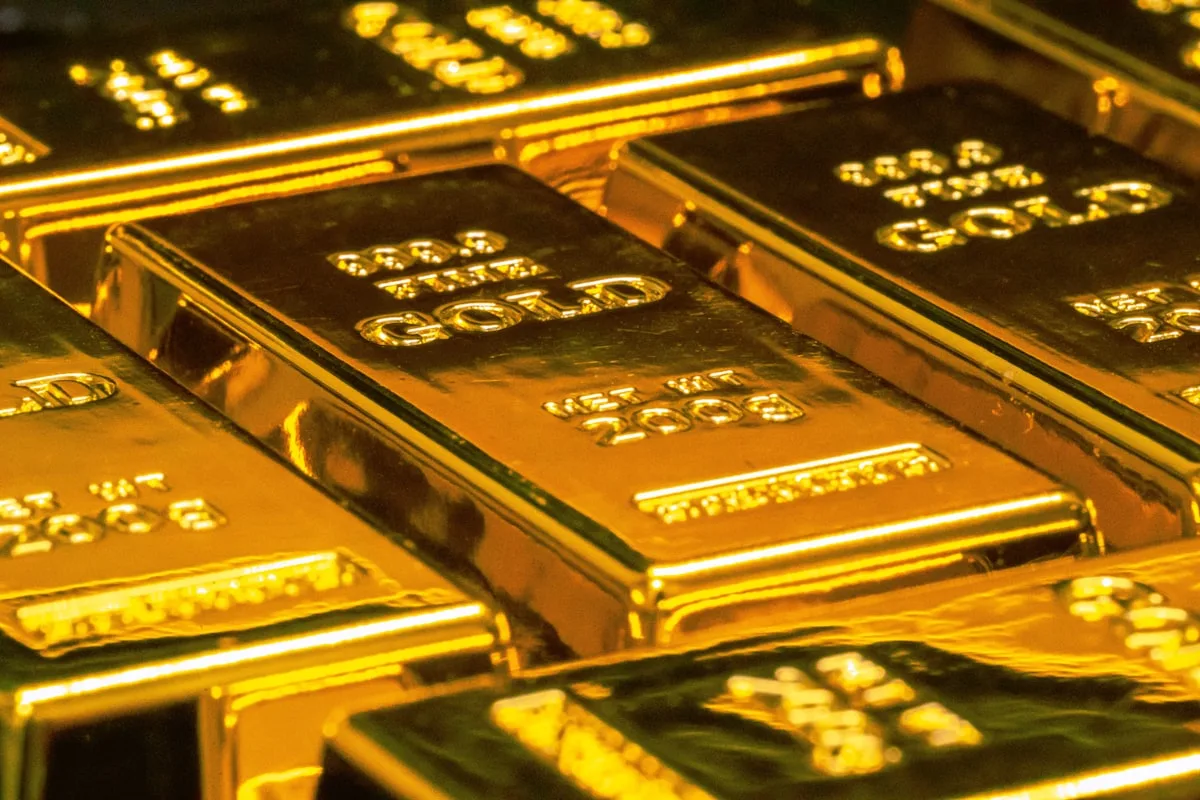
United States President Donald Trump revived one of the more idiosyncratic policy promises of his second term on Sunday, May 10, 2026, telling investigative journalist Sharyl Attkisson in a wide-ranging interview on Sinclair Broadcast Group's Full Measure that he still wants to personally inspect the United States Bullion Depository at Fort Knox, Kentucky, to "see whether or not we have any gold in there." The verbatim line that lit up coverage: "I wonder if they left the gold in Fort Knox because they steal a lot."
Trump did not identify who he believes might have stolen the gold. He did not commit to a date for the visit. And when Attkisson asked whether he still intended to follow through on the audit promise he originally made in February 2025 — at the height of the Elon Musk-led Department of Government Efficiency (DOGE) push — Trump answered: "I do want to go to Fort Knox sometime. I want to see if the gold is there, which I'm sure it will be."
Newsorga's read on the news value: the substance of the claim has not changed in 15 months, the proposed audit still has not happened, the Treasury has continued to insist its annual audit is complete and reconciled, and the underlying conspiracy theory is older than most of the people who repeat it. What has changed is that Trump is publicly reactivating the question, which keeps it inside the political news cycle and forces the Treasury to keep answering it.
What was said, on the record
Forbes reporter Zachary Folk filed the primary write-up on Sunday, with The Independent producing the most detailed parallel account on Monday. The transcript points, as captured by both outlets from the Attkisson broadcast:
- "Well, we wanted to go and knock on their door — Fort Knox, very thick door — and to see whether or not we have any gold in there."
- "It's a very interesting question. We played with that. I wondered if they left the gold in Fort Knox because they steal a lot."
- "I do want to go to Fort Knox sometime. I want to see if the gold is there, which I'm sure it will be."
The White House did not respond to requests for comment from either The Independent or Forbes about whether a presidential visit is scheduled. Fort Knox representatives also did not respond on the record.
What's actually at Fort Knox
The United States Bullion Depository is a fortified underground vault on the grounds of the Fort Knox Army installation outside Louisville, Kentucky, completed in 1936 and operated by the United States Mint, a bureau of the Department of the Treasury. Per the US Mint's own official disclosures and the Treasury's annual gold-stock reports:
- Current holdings: 147,341,858.382 fine troy ounces of gold bullion.
- That is approximately half of the US Treasury's total gold holdings (the rest is split across the Federal Reserve Bank of New York, West Point Bullion Depository, and Denver Mint).
- Statutory book value: $42.2222 per fine troy ounce — a rate fixed by Congress under the Par Value Modification Act of 1973, before the gold price was allowed to float freely. At the statutory price, the Fort Knox holding books at about $6.2 billion.
- Market value: at gold's current spot price (above $2,950/oz at the time of writing), the Fort Knox holding is worth in excess of $435 billion, with some recent calculations placing the figure closer to $700 billion depending on the price snapshot used.
- No visitor access. The vault is closed to the public. The last public inspection by any external party was a one-time visit organized by then-Treasury Secretary William Simon in September 1974 for a small group of journalists and members of Congress.
Newsorga's observation: the gap between the $42.22 statutory book value and the $2,950 market spot price is itself one of the structural quirks the gold-audit crowd seizes on. The book value has not been changed since 1973, which means the United States federal government's official accounts continue to value its gold reserves at roughly 1.4% of their actual market value. Any decision to revalue would have meaningful Federal Reserve balance-sheet and debt-ceiling consequences — which Newsorga has covered separately and which is, in Treasury Secretary Scott Bessent's more sympathetic readings, the substantive reason a senior official might be interested in the depository's contents.
The 15-month gap
Trump first announced the audit intention on February 24, 2025, during the same press window in which Elon Musk's DOGE team was claiming the discovery of "hundreds of billions of dollars of fraud" across federal agencies. The original line, per Forbes: "We're actually going to Fort Knox to see if the gold is there. Because maybe somebody stole the gold. Tons of gold."
Musk himself spent several days in February 2025 amplifying the audit pitch across X, posting unsubstantiated claims that the gold reserves "may have been stolen" and at one point suggesting that a live-streamed Fort Knox walkthrough would settle the question. Senators and representatives who publicly backed the audit included:
- Senator Rand Paul (R-KY) — issued a public letter to Bessent in March 2025 requesting a 30-day deadline for a senatorial inspection visit.
- Representative Thomas Massie (R-KY) — released a constituent statement supporting the audit.
- Senator Mike Lee (R-UT) — claimed on X that he had "repeatedly" tried to access the base.
Per Lexington Herald-Leader reporting, more than 100 days passed after Senator Paul's request without a substantive response from Treasury beyond Bessent's standing offer that "any U.S. senator who wants to come and visit it can arrange a visit through our office." No senator has, in fact, conducted such a visit on the public record.
Musk left the DOGE role and the Trump White House by late May 2025 — which Newsorga has covered separately — and the political pressure for an audit decompressed in parallel. The Sunday Attkisson interview is the first sustained presidential reactivation of the topic since.
The Treasury's standing answer
Treasury Secretary Scott Bessent has been consistent on the record from the start. Speaking to Bloomberg shortly after the February 2025 audit announcement: "We do an audit every year. I can tell the American people on camera right now, that there was a report Sept. 30, 2024 — all the gold was there. Any U.S. senator who wants to come and visit it, can arrange a visit through our office."
The annual audit that Bessent refers to is conducted by the Treasury Office of Inspector General (OIG), with statistical sampling and physical verification under the Committee on Treasury Gold protocol that has been in place since the 1974 inspection. Newsorga's read: the audit is a real procedure, but it is also one that has never been subjected to external third-party verification of the kind that, for instance, the Bank of England's gold custody is subject to under the London Bullion Market Association rules. That gap is what the audit-pushers are pointing at, even when they wrap it in conspiracy framing.
Why the conspiracy keeps coming back
The "is the gold still there?" question has recurred in American politics for half a century. Notable resurgences:
- 1974: Treasury Secretary William Simon organised the journalist tour specifically because Watergate-era distrust of federal institutions had made an old conspiracy newly viral.
- 1981: A round of audit demands during Reagan's first year tied to the Gold Commission debate over a possible return to the gold standard.
- 1990s-2000s: A Goldfinger-flavoured strain of internet conspiracy after the closure of the gold window in 1971 was repeatedly invoked to suggest the gold had been quietly used to finance balance-of-payments obligations.
- 2025-2026: The Musk / DOGE revival, now with X algorithmic amplification and a sympathetic White House.
Newsorga's assessment of the substantive evidence: there is none. The US Mint has not recorded a material transfer of bullion out of the Bullion Depository in decades. The chain-of-custody record for the 147,341,858.382 ounces traces through annual reports the Treasury has continued to publish through every administration since the 1970s. The conspiracy survives because its narrative is more compelling than its evidence, not because the evidence has shifted.
Why it still matters as news
Three reasons this story is not trivial, even if its claims are weak:
1. Markets care about reserve credibility. Central-bank gold-reserve credibility matters for dollar reserve currency standing. Russia, China, Turkey and other central banks have substantially increased their gold reserves since 2022 in part as a hedge against dollar weaponisation through sanctions. Any sustained presidential suggestion that US gold reserves are not where they are reported to be — even if the suggestion is unsupported — feeds into the global central-bank reserve-diversification narrative that has accelerated under Trump's second term.
2. Constitutional accountability. Whatever one thinks of the conspiracy, the question "should the president and accredited members of Congress be able to physically inspect the contents of a federally-held vault?" is a legitimate one. Senator Paul's procedural request was not unreasonable on its face. The fact that Treasury has not arranged a senatorial visit in 15 months is itself a small-scale accountability problem, separate from the underlying gold-audit politics.
3. The book-value question. If a serious bipartisan audit of the gold did happen and did recommend revaluing the holdings from $42.22/oz to market price, the federal balance sheet would gain approximately $430 billion of paper assets overnight. That is a politically attractive number in an environment where the federal deficit is running above $1.7 trillion. Some commentators on both the right and left have suggested gold revaluation as a fiscal mechanism for de facto debt-monetisation. Newsorga's view: this is the interesting policy question underneath the "they steal a lot" framing, and it is the one the Treasury is least eager to bring into public debate.
What happens next
Newsorga is watching three concrete data points:
1. A scheduled visit. If the White House announces a date for a presidential Fort Knox visit within the next 90 days, the story stays alive and the audit becomes a real event. If no date appears by August, the Attkisson comments will read as another iteration of "I do want to do this someday" — a category of Trump policy promise that has a long historical track record.
2. A renewed senatorial push. Senator Paul has flagged the issue regularly. A formal Senate Banking or Finance Committee hearing on US gold reserves — which has not happened since the early 1980s — would shift the story from cable-news segment to legislative-record event.
3. The September 30, 2025 audit report. Treasury OIG typically issues the Fort Knox audit report each spring covering the prior September. The 2025 report, if published before the White House has either scheduled or cancelled a visit, becomes the operative on-the-record document. Newsorga will track its release date.
Bottom line. The gold is almost certainly still at Fort Knox, Treasury Secretary Bessent has said so on the record under his own name, and the US Mint's chain-of-custody documentation supports the claim. President Trump wants to look anyway. After 15 months, he still has not. Sunday's interview suggests that may not change soon — but it also signals that the question is one Trump is willing to keep raising into a second year of his term, with whatever monetary, diplomatic and political implications that brings.