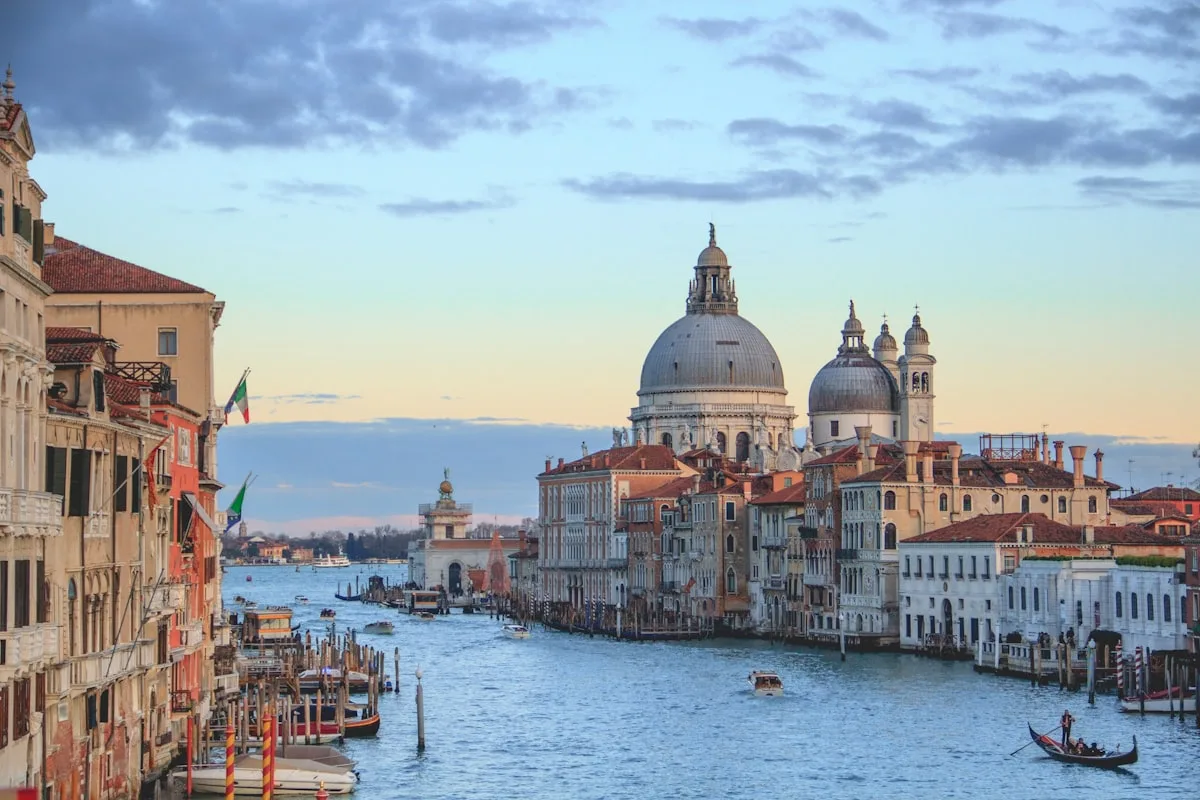
The 61st International Art Exhibition of La Biennale di Venezia opened on Saturday, May 9, 2026 and runs through Sunday, November 22, 2026, but the world's oldest and most influential contemporary-art festival is being staged in a level of political and institutional turmoil that older curators are comparing to 1974—the year Biennale director Carlo Ripa di Meana cancelled national pavilions outright in protest at the Chilean coup against Salvador Allende. This year's editions of the Golden Lion and Silver Lion prizes have been abolished; the entire five-member international jury resigned nine days before the opening; the European Commission has cut €2 million ($2.3 million) in funding over Russia's return; the South African pavilion stands empty; Pussy Riot and FEMEN activists stormed the Russian pavilion in the Giardini on May 6; and thousands marched through Venice on May 8 demanding Israel be excluded.
This is the controversy stack, in the order it matters for understanding what the next six months of "In Minor Keys"—the main exhibition curated posthumously to the plan of the late Koyo Kouoh—will actually look like.
Who runs the Biennale right now
The decision-making structure is small. The Biennale Foundation is led by president Pietrangelo Buttafuoco, a writer and conservative cultural commentator appointed by Italian prime minister Giorgia Meloni's government. Underneath sits the curatorial direction of the 61st International Art Exhibition, which was developed by Koyo Kouoh, the Cameroonian-born artistic director and the first African woman appointed to curate the main international show. Kouoh died of cancer in May 2025 at the age of 57; the Biennale chose to carry out her exhibition posthumously, with 111 invited participants spread across the Giardini and the Arsenale.
Kouoh's theme, "In Minor Keys," is itself a restorative-resistance proposition. "The minor keys refuse orchestral bombast and goose-step military marches and come alive in the quiet tones, the lower frequencies, the hums, the consolations of poetry," she wrote in her introduction. "Though often lost in the anxious cacophony of the present chaos raging through the world, the music continues." That curatorial frame is now being heard against an unusually loud political background that Kouoh, in life, would have had to navigate herself.
What happened with the jury
The international jury for the 61st exhibition was made up of Solange Farkas (president), Zoe Butt, Elvira Dyangani Ose, Marta Kuzma and Giovanna Zapperi. Their original task was to award, on opening day May 9, the Golden Lion for best national pavilion and the Golden Lion for best participant in the main show, plus Silver Lions for promising artists. Days before opening, the jury published a statement of intention through the art platform e-flux declaring that it would not consider for prizes any country whose leaders had been charged with crimes against humanity by the International Criminal Court.
That criterion has a sharp practical edge. The ICC issued an arrest warrant for Russian President Vladimir Putin in 2023 over alleged war crimes in Ukraine, including the deportation of children, and in 2024 issued an arrest warrant for Israeli Prime Minister Benjamin Netanyahu for alleged crimes during the Gaza war. The jury's rule would therefore have specifically excluded the Russian and Israeli pavilions and any associated participants from prize consideration. On Thursday, April 30, 2026, all five jurors resigned. The Biennale's official statement provided no explanation. It remains officially unclear whether the panel was asked to step down, but the resignation came days after Italian Culture Ministry officials had visited Venice to gather documents on the Russian pavilion for the EU.
The new "Visitor Lions" award system
Rather than appointing a replacement jury before opening day, the Biennale changed the award structure outright. Two prizes are now in place: Best Participant in the 61st International Art Exhibition "In Minor Keys," and Best National Participation among the 100 national pavilions. Both will be selected by ticket-holders, voting anonymously through an email-based system during the run of the festival, and announced on the closing day, November 22, 2026. Cabinet minister Matteo Salvini described the switch as "an autonomous and democratic Biennale—it doesn't get any better than that." Many participants disagree.
Dozens of artists, including high-profile names like Laurie Anderson, Alfredo Jaar and Zoe Leonard, have signed a statement of withdrawal from the Visitor Lions competition, framing the new prize as a fig leaf rather than a fix. France, Ecuador and the United Arab Emirates—three of the 100 national pavilions on show this year—have also pulled their national entries out of award consideration, saying the move is in solidarity with the resignation of the jury.
Russia's return and the €2 million EU funding cut
After Russia's full-scale invasion of Ukraine in February 2022, Russian artists and curators voluntarily withdrew, the Russian pavilion in the Giardini was padlocked and guarded by Italian police, and the Biennale put up a temporary monument to Ukrainian artists. Russia skipped 2024 as well, lending its pavilion to Bolivia. The country's last formal participation was in 2019. For 2026, Russia notified the Biennale it would return.
Crucially, under the Biennale's constitutional rules, the foundation "does not have the authority to prevent a country from participating": any state recognised by the Italian Republic can request to take part, and because Russia owns the pavilion (built in 1914), only a notification was required. Pietrangelo Buttafuoco made the political case in a La Repubblica interview: "There will be Russia, Iran, Israel. There will be Ukraine and Belarus. Everyone. The Biennale should be open to everyone. I close to no one."
The European Commission disagreed. In late April it cut €2 million ($2.3 million) in EU funding to the Biennale over the next three years, citing Russia's participation. Italian Prime Minister Giorgia Meloni told reporters her government did not support the decision to readmit Russia but acknowledged the Biennale's statutory autonomy. Culture Minister Alessandro Giuli went further, refusing to attend either the preview days or the May 9 opening, sending Culture Ministry inspectors to Venice instead to gather documents. Deputy Prime Minister Matteo Salvini called the EU's threat "vulgar blackmail" against "one of the most important and free cultural bodies in the world." Venice mayor Luigi Brugnaro said in March that the Russian pavilion would be shut down if it engaged in propaganda, but argued the Biennale should remain a venue for dialogue.
Who is running Russia's pavilion
A specific element of the Russian-pavilion row has drawn close press attention. The Russian pavilion's commissioner, Anastasia Karneeva, is the daughter of Nikolai Volobuev, a former general in Russia's Federal Security Service (FSB) and current deputy chief executive of the state-owned defence contractor Rostec. That connection has been read by Ukrainian and European critics as evidence that the pavilion is not, in the Biennale's words, a politically neutral platform.
After negotiations between the Biennale leadership and Karneeva, the pavilion will not function as a normal exhibition. It will remain closed to the public, accessible only during the preview days of May 6 to 8, with Russian artists filmed during performances; the resulting video recordings will then be projected in the pavilion's windows for the remainder of the Biennale. The compromise has not satisfied protesters. Over 50 Pussy Riot members, joined by FEMEN activists, stormed the pavilion on May 6 in bright pink balaclavas, set off smoke flares and chanted "No Putin in Venice." Pussy Riot's Nadezhda Tolokonnikova told DW the Russian show is "an attempt to polish Russia's image and make the world forget the victims of Russian terror," and called on Italy to remove official Russian representatives and instead exhibit work by Russian political prisoners.
The Israel row and the open letters
The Israeli national pavilion in the Giardini is closed for renovation this year, so Israel has been given exhibition space in the Arsenale—the central industrial complex where Kouoh's main international show is also housed. That juxtaposition has angered protesters who do not want Israeli state representation embedded inside the main curatorial space during the Gaza war. Nearly 200 artists, curators and workers participating in the 2026 Biennale signed an open letter organised by the Art Not Genocide Alliance (ANGA) calling for Israel to be excluded outright. A second letter, signed by more than 70 artists and curators from the main exhibition itself, calls for the exclusion of "all current regimes committing war crimes," explicitly naming Israel, Russia and the United States; it was sent in March to Buttafuoco and reprinted on e-flux.
The Israeli pavilion's artist for 2026 is Belu-Simion Fainaru, a Romanian-born sculptor who has long lived and worked in Haifa. Fainaru has declined the boycott framing: "I do not support cultural boycotts. I believe in dialogue and exchange, especially in challenging times." Culture Minister Giuli has expressed solidarity with Fainaru by phone, citing "recent attacks," and reiterating the Italian government's stated "commitment against every form of discrimination and antisemitism in Italian cultural institutions." On Friday, May 8, thousands of people marched through Venice protesting Israel's presence at the event; the Japanese, Finnish and UK pavilions closed for hours so their artists and curators could join the demonstration.
The 2024 precedent at the Israeli pavilion
The current row reads against a fresh precedent. At the 2024 Biennale, Israeli artist Ruth Patir and her curators decided to close the Israeli pavilion on opening day and only reopen on the establishment of a ceasefire in Gaza and a hostage-release agreement. That self-restraint was widely read as a more nuanced response than either a boycott or a defiant exhibition. The fact that Fainaru and his team have chosen to participate fully in 2026—and that the Italian government is offering them protection rather than political distance—is therefore part of why protests have escalated in tone this cycle.
There has never been a Palestinian national pavilion at the Biennale, because only countries officially recognised by the Italian Republic can participate, and Italy does not recognise Palestine as a state. A separate, non-Biennale exhibition titled "Gaza — No Words" is running in Venice during the Biennale run to fill that representational gap.
South Africa's empty pavilion
Gabrielle Goliath, the South African contemporary artist selected to represent South Africa, designed a performance piece that included a tribute to Hiba Abu Nada, the Palestinian poet killed in an Israeli airstrike in October 2023. South Africa's culture minister, Gayton McKenzie, requested several edits, describing the work as "highly divisive." Goliath refused. The pavilion was abruptly cancelled in January 2026 and the South African government did not nominate a replacement, so the pavilion now stands empty. A video installation version of Goliath's work is being shown at a non-Biennale venue elsewhere in Venice. Goliath is suing her country's culture minister.
The South African row is striking because Pretoria is the government that filed the genocide case against Israel at the International Court of Justice in December 2023. The decision to censor a tribute to a poet killed in Gaza, originating from the same culture ministry, has been read by South African and international commentators as a contradiction the government has not satisfactorily explained.
Australia, U-turned
Australia provides the cleanest example of how political pressure has been operating on individual national pavilions ahead of 2026. In February 2025, the country's governmental arts advisory body dropped its commissioned duo—Lebanon-born artist Khaled Sabsabi, who emigrated to Australia at the age of 12, and curator Michael Dagostino—after right-wing political figures accused Sabsabi of antisemitism. Sabsabi's work deals with civil-war trauma, Arab-immigrant identity and Islamophobia.
Following sustained backlash from the Australian arts community, multiple resignations from arts boards, calls for boycotts, and an independent review by an external body, the decision was reversed. Sabsabi and Dagostino were reinstated in time to mount the Australian pavilion for the 2026 Biennale. The Sabsabi episode is now being cited by Goliath's supporters as a procedural template that South Africa could and should have followed.
What else is on show
Underneath the political headlines, the artistic programme is substantial. The 61st edition lists 100 national participations, with seven first-time countries: Guinea, Equatorial Guinea, Nauru, Qatar, Sierra Leone, Somalia and Vietnam—a meaningful broadening of the Global South presence at a festival often criticised for European weighting. Iran announced its withdrawal on May 4 amid escalating Middle East tensions and the ongoing US-Iran ceasefire diplomacy.
The German pavilion, titled "Ruin," is built on research about the GDR and the post-1990 reunification period; it features the work of installation artist Henrike Naumann, who died in February 2026 aged 41, alongside Vietnamese-born Berlin artist Sung Tieu. The Vatican pavilion, titled "The Ear is the Eye of the Soul," is inspired by the 12th-century Benedictine abbess and mystic Hildegard of Bingen and commissions sonic compositions from 24 artists, including Brian Eno, Patti Smith and FKA Twigs. These exhibitions, together with the 111 invited participants in Kouoh's main "In Minor Keys" show, comprise the substantive programme that visitors will judge through the Visitor Lions vote.
What to watch over the next six months
Three threads will determine how this Biennale is remembered. First, whether the Visitor Lions vote produces a credible result on November 22, or whether the email-vote mechanism is gamed or undermined by the mass withdrawals already announced. Second, whether the Russian pavilion stays in its current closed-with-window-projection compromise, or whether mayoral or government action shuts it down completely under the propaganda clause that Brugnaro publicly invoked in March. Third, whether further pavilions—particularly those from countries whose artists signed the 74-signatory letter—close their doors in protest during the run, the way Patir did at the 2024 Israeli pavilion.
A wider question hangs over the Biennale as an institution. The EU funding cut of €2 million over three years is small in absolute terms relative to the Biennale's roughly €30 million-plus annual budget, but the precedent matters: a European cultural body is being financially sanctioned by the Commission over the inclusion of artists from a country whose leader faces an ICC warrant. Whether that becomes a one-off or a template for Stockholm, Edinburgh, Florence, Documenta in Kassel and other major international art exhibitions will be one of the more consequential side-effects of this Biennale year.
Bottom line
The 61st Venice Biennale is not, on the surface, a referendum on the Gaza war or Russia's invasion of Ukraine. It is a contemporary-art show built on the late Koyo Kouoh's curatorial vision of "minor keys"—quiet, attentive, restorative. In practice, the festival has become exactly that referendum, because the Italian government, the European Commission, Pussy Riot, the Art Not Genocide Alliance, the Australian Senate, the South African Cabinet and at least 270 artists and curators are all using it as one. The art will be on the walls and in the pavilions for six months. The fight over who belongs in those rooms will, on current evidence, continue at every step until the November 22 closing day.