What is being reported—not announced
Apple has not issued a press release confirming camera hardware in AirPods. What exists in public is journalism citing people familiar with development, chiefly Bloomberg reporting summarized by MacRumors, The Verge, and trade outlets. Those accounts describe prototype and pre-mass-production work on earbuds with embedded optical sensors intended for on-body AI, not for consumer photography.
Treat every detail below as reported or rumored until Apple publishes specifications, privacy labels, and regulatory filings (for example FCC RF exhibits in the United States). Hardware validation phases can still slip or cancel features.
The claimed hardware shape
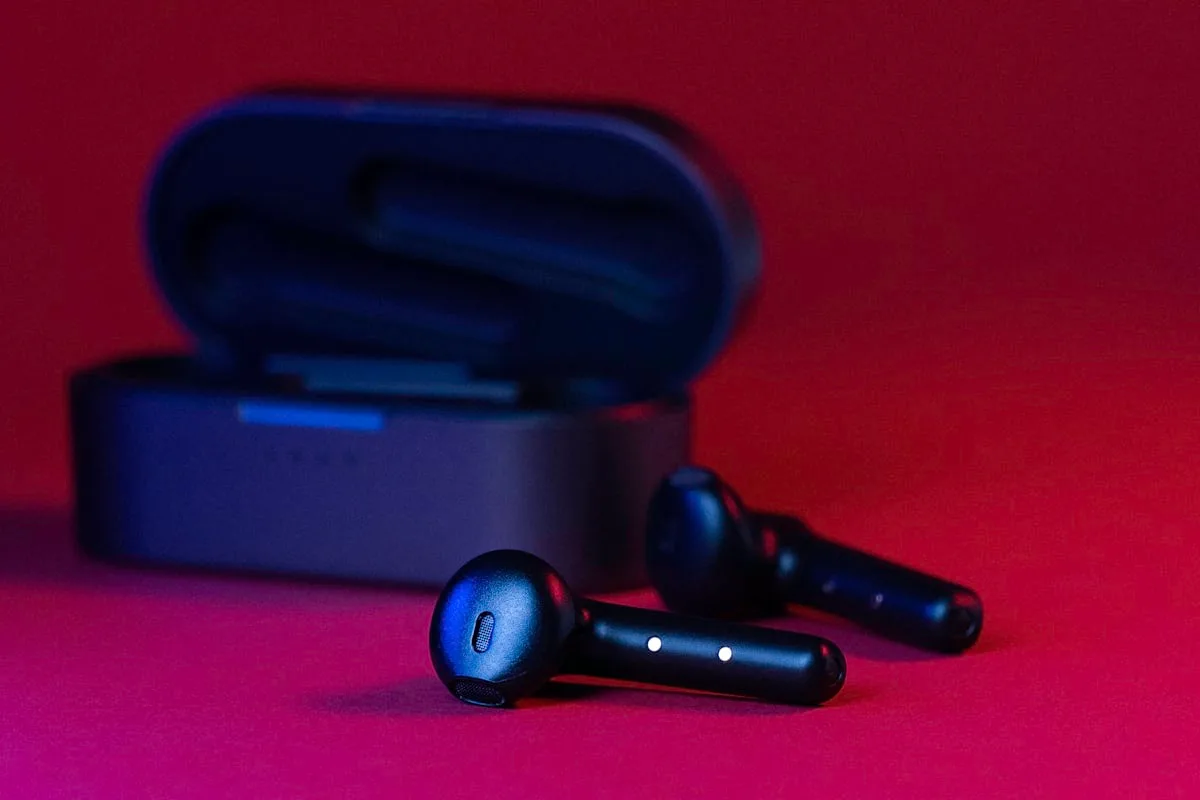
According to MacRumors’s recap of Bloomberg, the design is close to finalized and resembles AirPods Pro 3 aside from longer stems that house the sensor package. Earlier rumor rounds cited infrared-style low-information capture rather than iPhone-class imagers.
A small LED is said to illuminate when visual data is transmitted toward Siri or cloud processing—a transparency affordance that also previews how EU DMA-style messaging and U.S. state privacy laws might scrutinize always-worn sensors.
Intended software behavior
Reporters describe non-camera behavior by design: no photos or videos for the Camera Roll. Instead, the sensors act as context eyes for Siri, analogous to uploading an image to a chatbot, but continuous and hands-free.
Example use cases in coverage include object Q&A (“what can I cook with what’s on this counter?”), richer turn-by-turn guidance by reading the street scene, and reminders triggered by visual cues. The stories tie this to Apple’s broader Visual Intelligence narrative expected in iOS 27 and sibling releases, alongside a Siri overhaul slated for September timelines in the same reporting chain.
Pipeline stage jargon in plain English
Outlets including The Verge reference design validation testing (DVT)—a phase where units resemble near-final plastics and antenna layouts and employees dogfood devices under strict controls. Success leads toward production validation (PVT) and then ramp at contract manufacturers.
Calling a project “advanced” does not guarantee a keynote date; Apple can pause if yield, thermal, or privacy review fails.
Why timing may hinge on Siri, not silicon alone
MacRumors notes Apple reportedly targeted a first-half 2026 ship but held the earbuds because the more capable Siri stack was not ready. If accurate, it illustrates Apple’s AI strategy: wearables as peripheral senses that only justify their battery and BOM cost when assistant quality crosses a threshold.
Delays to server-side models, on-device routing, or graph knowledge could push a launch into 2027 even if plastic molds are frozen.
Branding, price, and lineup positioning
Coverage is unsettled on naming: “AirPods Pro 4” may be wrong, with “AirPods Ultra” or “AirPods Pro 3 (with cameras)” floated. Mark Gurman posts cited by MacRumors suggest pricing above current AirPods Pro 3, implying a premium tier rather than a universal replacement.
That tiering matters for services attach (AppleCare+, loss insurance) and for developer API adoption if third-party apps ever receive sanitized scene tokens.
Privacy, security, and social acceptance
Ear-level imaging—even low-res—raises workplace surveillance questions, consent in conversations, and cross-border data transfer if frames exit the device. Apple typically markets on-device processing; reporters nonetheless mention cloud paths for heavy models.
Expect white papers on differential privacy, face blurring, and retention windows if the product ships. Competitors and regulators will also ask whether LED indicators are visible in sunlight and whether mute hardware switches exist.
Most-cited factual anchors from reporting (not from Apple PR)
Report date anchor: widespread coverage May 7, 2026. Stage anchor: advanced testing / near early mass production per Bloomberg chain. Function anchor: AI sensing only—no user photo/video mode in reports. UX anchor: LED on during visual upload. OS anchor: iOS 27 / September Siri timeline cited by MacRumors.
These anchors track journalism, not verified spec sheets.
What would confirm the story officially
Watch Apple developer sessions for Accessory framework hooks, Bluetooth profile updates, and privacy plist keys. Watch Asian supply-chain earnings calls for micro camera module bookings. Watch FCC labels for new AirPods model numbers.
Absent those, the accurate headline remains “in development per reporters.”
Bottom line
Credible supply-chain journalism describes Apple prototyping camera-equipped AirPods variants in late-stage validation, meant to feed Visual Intelligence to Siri rather than compete with an iPhone shooter. Timing and naming are still open, and regulatory comfort may matter as much as engineering.
For readers, the product—if it ships—would encode a bet that ambient AI needs persistent egocentric context, and that users will tolerate sensors on their ears when trust and utility are high enough.