On the evening of Saturday, May 9, 2026, after presiding over the most heavily curtailed Victory Day parade since the Putin era began, Russian President Vladimir Putin told reporters in Moscow that the war he launched against Ukraine more than four years ago was "coming to an end." The phrasing — "I think that the matter is coming to an end" — was off-camera, conversational, and came less than half a day after a parade address in which Putin had told ranked soldiers on Red Square that "victory has always been and will be ours," crediting "moral strength, courage and valour" with the country's ability to "endure anything and overcome any challenge."
The duality is the story. On the public-facing record, Putin delivered the maximalist Victory Day stage performance the Kremlin has built for the better part of two decades. Off the stage, he conceded — for the first time on such a platform — that the war has a foreseeable end. Whether those two things can coexist diplomatically over the coming weeks is the question that Washington, Kyiv and Berlin spent the weekend trying to answer.
A parade visibly stripped down
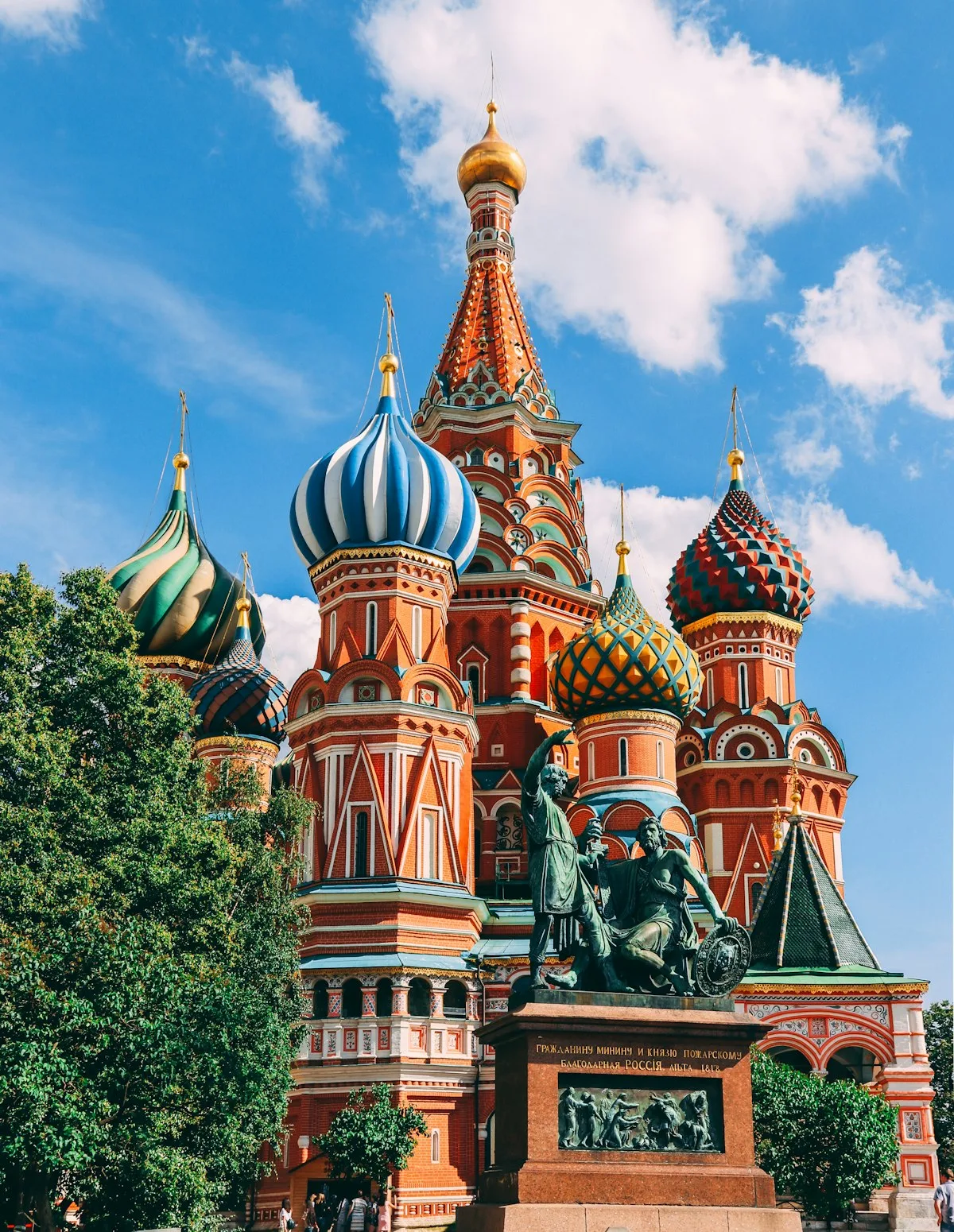
The 2026 parade was visibly smaller than any in recent memory. There were no tanks on the cobblestones of Red Square. There were no nuclear-capable intercontinental ballistic missiles of the kind that had appeared every year since 2008. There were no other heavy-armour columns. Russian state-media coverage and AFP/Getty pool images circulated through major wires confirm the same visual: troop columns, banners, regimental flags, but no rolling stock.
The reasons given for the contraction split into two categories. Officially, Russian authorities cited security considerations and announced extensive mobile-internet and text-messaging restrictions across Moscow during the day. Unofficially, the same constraints reflect what a Donald-Trump-brokered three-day ceasefire required of both sides: that no obvious targeting opportunity be created during the truce. Volodymyr Zelensky issued a public decree "permitting" Russia to hold the parade and confirming that Ukrainian forces would not target Red Square during the truce — a phrasing the Kremlin noted with a mix of irritation and tactical relief.
Among the seated guests next to Putin was Kirill Semyonov, 103, identified by TASS as the oldest living veteran of World War II. The seating choice did the rhetorical work the parade's reduced military hardware could not — anchoring the day in the 81st anniversary of the Soviet victory over Nazi Germany, the most stable narrative the Russian state has, rather than in the contested 2022-2026 conflict that Putin otherwise had to address.
What Putin actually said after the parade
Putin's post-parade remarks to reporters in Moscow contained four substantive lines:
- The war is "coming to an end": a phrasing the Kremlin has not authorised in any senior official's public remarks since the invasion began.
- He would be willing to negotiate new European security arrangements — not just an Ukraine-specific settlement, but a wider re-architecting of post-Cold War security across Europe, the kind of demand Moscow has repeatedly placed on the table since 2022.
- His preferred negotiating partner for that discussion would be Germany's former chancellor Gerhard Schroeder, who has retained personal ties to Putin since their 1998-2005 working relationship and who, since 2017, has been a public defender of Russian energy and gas interests through his roles at Rosneft and Nord Stream AG.
- A meeting with Volodymyr Zelensky would happen, but only as a final step, after a "peace treaty" had already been substantively agreed — confirming the Russian position that a leaders-level meeting is a ratifying act, not a negotiating one.
European leaders rejected the Schroeder proposal almost immediately. Schroeder has been the subject of repeated calls from inside Germany's SPD for his expulsion from the party over his Russia ties, and his public role in any European security mediation would be politically unworkable in Berlin, Paris and Warsaw. Newsorga's reading is that Putin floated the name partly to test reaction and partly to deny Berlin an opportunity to claim ownership of any track-two channel — naming a retired German chancellor allows Moscow to bypass the current government.
The Trump ceasefire and its three-day cap
The diplomatic frame for Saturday's parade was Trump's three-day ceasefire. The US president told reporters the same day that he "would like to see a big extension," describing the pause as "the beginning of the end of a very long, deadly, and hard fought war." The Kremlin's answer arrived within hours: Yuri Ushakov, a longtime senior aide to Putin, said the agreement was "meant to last for three days, not for longer" and made clear no extension was on the table at this stage.
Both sides accused each other of first-day violations. Russia said Ukraine had repeatedly violated the agreement; Ukraine said Russian drone attacks had continued on multiple cities. Newsorga's editorial position on these mutual claims is that without a verification mechanism, they are politically symmetric and analytically inconclusive — both sides have an incentive to claim violations by the other.
How Ukrainians read the day
The most consequential mood reading from the day did not come from Moscow or Washington, but from Ukrainian cities behind the front. Voices that wire services collected on Friday and Saturday included Oleksandr Boik in Kharkiv, who told reporters: "This ceasefire — for a day, or two or three — these are temporary measures. We need peace. It is the fifth year already. It is enough." Another Kharkiv resident, Ramaz Tsytsyashvili, said: "I have lost everything… We need peace. And perhaps there will be a miracle and this temporary silence, this ceasefire, will hold up a bit and continue, and then step by step it will move to negotiations, and affairs will be solved in offices, not on the battlefield."
Kateryna Kizev, 22, a displaced resident now living in Cherkasy, said the immediate value of the truce was that "at least for a few days we will be able to sleep in peace and without the attacks." Read together with Zelensky's decree permitting Russia to hold the parade, the Ukrainian civilian mood is exhausted but not yet trusting — the public welcome of the truce is conditional on it becoming the start of something longer.
Where this sits in the war's arc
Putin's "coming to an end" line is, on its own, not new diplomatic substance. Russian officials have used variants of it through 2024 and 2025 without those usages producing material concessions; what is new is that the phrasing was offered on Victory Day, the day the Kremlin uses to consolidate domestic narrative, and was paired with a parade visibly emptied of the kind of equipment that would normally accompany a war the state was confident of winning.
Three concrete things now matter more than the rhetoric. First, whether the three-day ceasefire holds long enough for the next round of US-led mediation contacts; Trump's preference is for it to extend, Putin's aides say it will not. Second, whether Putin's Schroeder signal opens a back-channel that European capitals can either neutralise or quietly use. Third, whether Ukrainian demands that any settlement preserve sovereignty and security guarantees can be reconciled with Russian demands for a new European security architecture, which historically reads as a demand for de facto NATO rollback. None of those questions were answered on May 9. What was answered is that the Kremlin has chosen, for now, to keep them open.