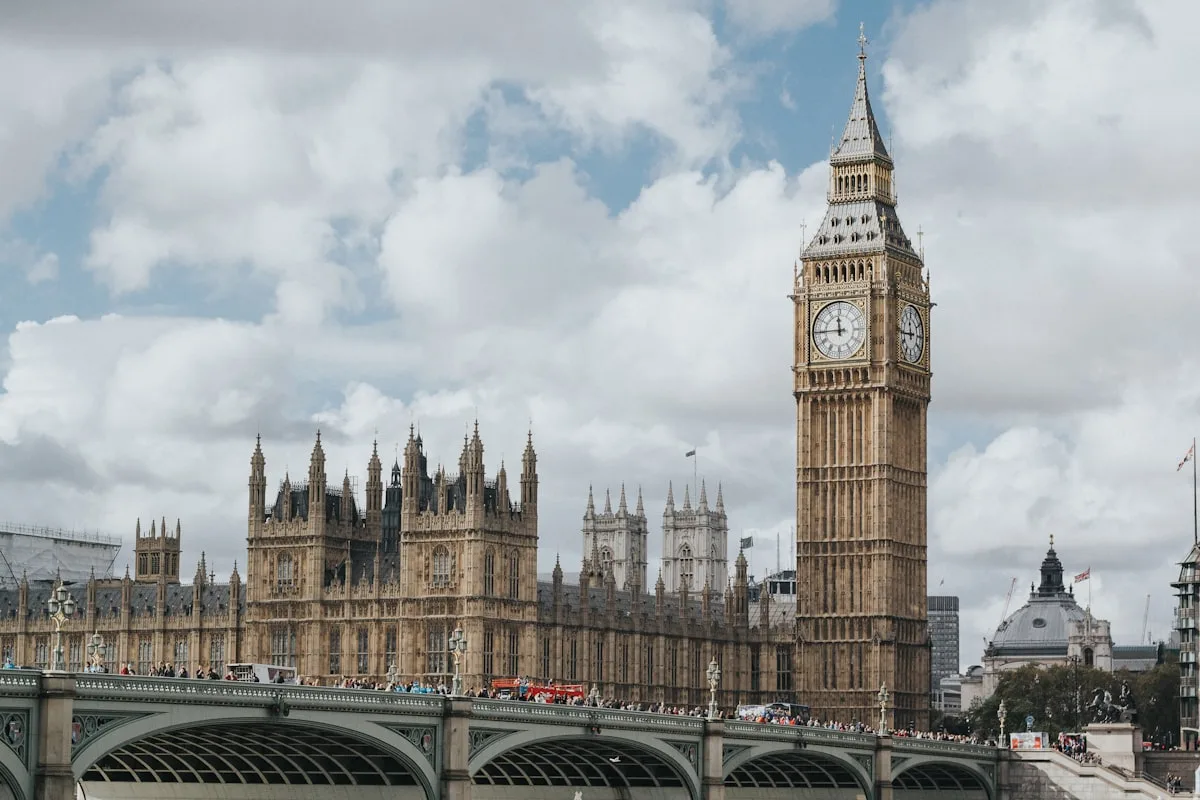
Site Selection magazine published its 2026 Global Best to Invest rankings in its May 2026 issue, keeping the United Kingdom at No. 1 for a second consecutive year and the London metro area at No. 1 in the separately calculated cities chart. The country top five reads United Kingdom, United States, Canada, Germany, Australia; the metro top five reads London, Singapore, Seoul, Shanghai, Amsterdam, with Amsterdam vaulting from 11th place a year ago. Below those headlines sit the more interesting movements: Saudi Arabia jumps from 25th to 14th, Japan rises from 20th to 13th, China climbs from 17th to 11th, France moves from 8th to 6th, Sweden rises from 10th to 7th, and Spain is the biggest improver inside the top 10, going from 11th to 9th.
Two parallel indices contained inside the 2026 release tell a slightly different story. On a per-capita basis, the United States tops the country chart, followed by the United Kingdom and Canada, because the headline ranking rewards absolute project volume. And in Kearney's 2026 FDI Confidence Index—one of the 12 input data sources Site Selection draws on—the United States is No. 1 for the 14th straight year, with the UK dropping from third to sixth. For the first time since 2013, the Kearney layer also shows Asia-Pacific markets holding 10 of the top 25 slots, with emerging markets accounting for 8 of those 10. Editor-in-chief Adam Bruns treats those shifts as the meaningful story of the 2026 wave; the headline UK position is the steady-state.
Who publishes Global Best to Invest
Site Selection is the flagship publication of Conway Inc., a privately held corporate-real-estate and economic-development media and data company founded in Norcross, Georgia in 1954. The magazine has been tracking corporate investment decisions for more than seven decades and is one of the few primary collectors of greenfield-project data outside the consulting firms. Its sister product, the Conway Projects Database, is the underlying source for the project-count, capital-investment and job-creation variables that anchor most of the Global Best to Invest scoring.
Adam Bruns, editor-in-chief of Site Selection, has run the Global Best to Invest series for more than a decade, and the May issue is the magazine's set-piece release each year. Unlike investor-sentiment surveys—Kearney's FDI Confidence Index is the best-known—Site Selection's methodology weighs realized projects more heavily than planning intentions. That is the design choice that lets the UK keep its top slot even when the more forward-looking Kearney survey moves it down: Site Selection rewards the deals that actually closed and broke ground.
The 12 data sources behind the index
Country rankings in the 2026 release draw on seven data sources: the Conway Projects Database (two years of project, investment and job totals), Kearney's 2026 FDI Confidence Index, the UN Development Program's Human Development Index, the IMD World Competitiveness Rankings, OECD inward FDI flow data, the World Intellectual Property Organization's Global Innovation Index, and the 2026 DHL Global Connectedness Index produced in partnership with NYU Stern. Each input occupies one of nine columns in the underlying scoring spreadsheet.
Metro rankings use six sources, four of them distinct from the country side: the Conway Projects Database (five years of metro-level project data), Kearney's Global Cities report, the Startup Genome Global Startup Ecosystem Report, the IMD Smart Cities Index, the Mori Memorial Foundation's Global Power Cities Index and the Startup Blink Startup Ecosystem Report. The mix is heavier on innovation and startup-ecosystem variables than the country side, which is why a city like Seoul climbs into the top three on a basket that captures venture funding, deep-tech talent and digital infrastructure alongside corporate-project flows.
Why the UK earned the top spot
The UK ranking rests on three pillars the 2026 release explicitly names. First, fiscal policy: the corporation tax rate is capped at 25 percent for this Parliament, which Site Selection describes as the lowest in the G7. Second, capital depth: Europe's largest venture-capital market is anchored in London, and the city's life-sciences segment alone attracted $2.1 billion in venture investment through 2025—1.6 times the 2024 total and more than triple the equivalent Paris figure of $679 million, according to London & Partners' November 2025 read. Third, trade-network reach: the UK has trade agreements spanning more than 70 countries and territories, the highest deal count of any single-jurisdiction economy outside the EU.
Layered on top of those structural strengths is an active talent-attraction policy, which the Site Selection write-up draws out at length. The £54 million Global Talent Fund is one piece of the £5 billion that the UK Department for Science, Innovation and Technology is committing to research-talent recruitment, with the doubling of the Global Talent Taskforce's resources announced at Davos in January 2026. Peter Kyle, UK Business and Trade Secretary, framed the strategy as positioning the country as the destination for the brightest minds in AI, quantum, life sciences and clean energy; Oliver Christian, His Majesty's Trade Commissioner to North America, told Site Selection the UK is now "simply the best place in the world to invest, grow and succeed." Both quotes are publisher-adjacent UK-government framing rather than independent analytical conclusions, and should be read as such.
The Site Selection top 25 movers
Below the top five, the 2026 list registers several significant repositionings. France rises from 8th to 6th, Sweden moves from 10th to 7th, Spain climbs from 11th to 9th—the biggest improver inside the top 10—and China jumps from 17th to 11th. Japan vaults from 20th to 13th, Saudi Arabia takes the largest leap of any country, from 25th to 14th, and India rises from 24th to 22nd in the overall chart even as it drops from 5th to 8th in the emerging-market sub-ranking. The pattern is consistent with the Kearney-side observation that emerging markets are now central rather than peripheral in global investment strategies.
Two market-structure forces drive most of these movements. First, supply-chain diversification out of China is sending capital that previously sat in coastal Guangdong and Jiangsu into Vietnam, Thailand, Malaysia, India and the Philippines—the "China-plus-one" thesis—while paradoxically also propping up China's own ranking because Beijing has retained the operational scale that drives raw project counts in the Conway database. Second, the Gulf states have moved from speculative to credible: Saudi Arabia and the UAE are now ranked No. 9 and No. 10 in Kearney's emerging-market index, with Kearney partner Igor Hulak crediting their "practical, consistent and execution-oriented industrial policy" rather than oil prices alone.
Per-capita reversal: US, UK, Canada lead
Adjusting for population size flips the top of the chart. On a per-capita basis, the United States ranks No. 1, followed by the United Kingdom and Canada, with Spain registering the most striking improvement—up from 18th to 9th on the population-normalised scale. The reversal reflects a methodological point that matters for interpretation: the headline Global Best to Invest score rewards absolute deal flow, which favours large economies; per-capita scoring rewards intensity of project capture relative to a country's resident workforce, which favours smaller efficient economies and high-income markets.
Both readings are defensible, and serious investors read them together. Absolute project count tells a multinational where it can plant a 5,000-job operation without straining the local labour market; per-capita capture tells a venture allocator which economies are converting demographic and institutional resources into deal flow at the highest efficiency. The fact that the US sits 2nd absolute but 1st per capita is the cleanest single illustration of why the 2026 release treats the two methods as complements rather than alternatives.
Metro rankings: London, Singapore, Seoul, Shanghai, Amsterdam
On the metro side, London retains its No. 1 position from 2025, Singapore drops from No. 1 to No. 2, and Seoul (3rd), Shanghai (4th) and Amsterdam (5th) complete the top five. Amsterdam's six-place jump from 11th is the largest movement inside the top 10, and Melbourne and Tokyo-Kanto both enter the top 10 from unranked status a year earlier. The Mori Foundation's Global Power Cities Index and Startup Genome's ecosystem scores are the principal drivers of those shifts, both of which weight talent inflows and venture-funding depth heavily.
TeleGeography's parallel Market Connectivity ranking—not part of the Site Selection methodology but cited in the editor's note—reinforces the metro story. Jonathan Hjembo, senior research manager at TeleGeography, noted that London ranks as the strongest global metropolitan market on the connectivity score, with more carriers present and more direct international city routes than any other market, and is also one of the world's largest data-centre and internet-peering hubs. The other top connectivity markets for the first half of 2026—Frankfurt, Tokyo, Singapore and Amsterdam—line up closely with the Global Best to Invest metro chart, which Site Selection treats as a cross-check that the index is picking up the right structural variables rather than statistical noise.
How Site Selection diverges from Kearney's FDI Confidence Index
Kearney's 2026 FDI Confidence Index, released in April under the banner "World Recalibrating," is the most-cited contrast with Site Selection's own ranking. Kearney puts the United States at No. 1 for the 14th consecutive year, followed by Canada (2nd), Japan (3rd), China including Hong Kong (4th) and Germany (5th), with the United Kingdom dropping from 3rd to 6th. The divergence is methodological: Kearney's index surveys 3,000-plus senior executives about forward-looking investment intent over the next three years, while Site Selection's flagship score is anchored on realized project counts and two-year historical FDI flows.
Erik R. Peterson, managing director of Kearney's Global Business Policy Council, attributed the UK's drop in his April 9 launch webinar to "uncertainty surrounding the nation's budget at the end of 2025," while flagging the 17-point fall in US net optimism for the next three years against a two-point rise for Canada. The takeaway for readers reconciling the two indices: when sentiment and realized outcomes diverge, the gap itself is the diagnostic signal. The UK won 2025 on closed projects, and Kearney's panel reads it as more uncertain for the next three years. Both can be true at once.
Asia-Pacific's record share of the top 25
The single most-cited finding in the 2026 Kearney layer of the Site Selection release is the share of the top 25 held by Asia-Pacific markets: 10 out of 25, the largest share since 2013, of which eight are emerging markets as defined by the International Monetary Fund. The biggest individual mover was Singapore, last year's No. 1 Global Best to Invest metro, which rose from 15th to 8th in Kearney's country index. Vietnam climbs from 19th to 16th—an ascent Peterson tied to its "growing role as a hub in Asia's semiconductor supply chain" and the May 2025 deregulation package—while Peru jumps from 24th to 21st.
Inside the emerging-market sub-ranking, China tops the list, followed by the UAE, Saudi Arabia, Brazil and Mexico, with Thailand rising from 10th to 6th and Malaysia from 11th to 7th, reflecting both countries' positions as the principal beneficiaries of the China-plus-one strategy. India, by contrast, slips from 5th to 8th among emerging markets even as its overall rank improves from 24th to 22nd, a pattern Site Selection flags as a surprise worth tracking. Kearney partner Shirley Santoso noted that FDI rose 67 percent in Thailand in 2025 on the back of streamlined licensing, e-government services and labour-pool training; Malaysia booked a record year on electronics and semiconductor inflows.
The Gulf rise: Saudi Arabia and the UAE
Saudi Arabia's 11-place leap from 25th to 14th in the Site Selection main chart is the largest single-country movement in the 2026 release. The United Arab Emirates also climbs sharply. Both ascents track underlying FDI numbers: UAE inward FDI rose to $45.6 billion in 2024 from $20 billion the prior year, and Saudi Arabia attracted $15.7 billion. Igor Hulak, Kearney's Riyadh-based partner, frames both trajectories as the product of "practical, consistent and execution-oriented industrial policy," rather than oil-driven sovereign-wealth deployment.
Where the Gulf story matters strategically is in how it converges with the broader 2026 finding that industrial policy is now a top investor screen. Kearney's survey found that 84 percent of respondents view industrial policy as extremely important or very important when deciding where to commit FDI, and that global trade-policy interventions have risen 260 percent in recent years (per Kearney's partners at Global Trade Alert). Gulf governments have used the industrial-policy moment to set up special economic zones, semiconductor incentives and AI-infrastructure subsidies that compete directly with US and EU industrial-policy packages.
What investors say drives 2026 decisions
When Kearney asked global business leaders to rank the most important factors in their FDI location decisions, technological and innovation capabilities finished No. 1, the strongest reason to invest in 10 of the top 25 markets in the index. Peterson described that as a "clear shift toward innovation-led competitiveness," driven in large part by AI infrastructure spending. Efficiency of legal and regulatory processes and ease of moving capital into and out of a market tied for second place. Talent finished tied for No. 10, and government incentives and cost of labour tied for No. 12—a notable demotion of the variables that dominated investor screens for most of the 2010s.
Despite the political and trade noise framing the 2026 environment, the underlying capital-deployment intent is robust. Eighty-eight percent of survey respondents told Kearney they planned to increase their FDI over the next three years. The Kearney panel was fielded before the start of the conflict in Iran, but Peterson said respondents "even then were anticipating some degree of turbulence in the year ahead" because of commodity volatility and political instability. The fact that the 88-percent number held despite that expectation is the strongest evidence in the 2026 release that the long-running re-globalization-is-dying narrative remains a thinner story than the actual flows suggest.
What the DHL Global Connectedness 2026 layer adds
The DHL Global Connectedness Report 2026, released in March in partnership with NYU Stern's School of Business, provides the final input layer for Site Selection's country ranking. Built on more than 9 million data points tracking international flows of trade, capital, information and people, it places the world's level of globalization at 25 percent in 2025—tied with the record high set in 2022—and finds that global trade grew faster in 2025 than in any year since 2017, excluding the volatile COVID-19 period. Singapore is named the world's most globalized nation, followed by Luxembourg and the Netherlands; the United Kingdom has the most broadly distributed flows worldwide; the UAE registered the largest increase in globalization since 2001.
Two structural findings cut against the dominant 2025-2026 narrative. US-China bilateral trade fell to 2.0 percent of global trade in 2025, down from 2.7 percent in 2024, but global trade overall continued to grow because only 13 percent of world imports went to the US and 9 percent of exports came from the US. Over the past decade, only 4 to 6 percent of global goods trade, greenfield FDI and cross-border M&A has shifted away from geopolitical rivals, and most of that flow has moved not to formal close allies but to countries with flexible geopolitical positions such as India and Vietnam. DHL Express CEO John Pearson summarised the report as evidence that countries and companies "are not retreating behind national borders," while Steven A. Altman of NYU Stern cautioned that the politics around globalization is now "much more volatile than the actual flows."
Bottom line
The 2026 Global Best to Invest, published in Site Selection magazine's May 2026 issue and built on 12 input data sources, keeps the United Kingdom at No. 1, the United States at No. 2 and Canada at No. 3 on absolute project count and rewards London as the world's leading metro for the second year. Below the top five, the movement is in Asia and the Gulf: Saudi Arabia (14th, up from 25th), Japan (13th, up from 20th), China (11th, up from 17th), Singapore rising to 8th in Kearney's parallel sentiment index from 15th, and Asia-Pacific holding 10 of the top 25 slots there for the first time since 2013.
Read together, the 2026 release's strongest signal is not that the UK won—it has won several years in a row—but that the centre of investor gravity is rotating eastward and toward the Gulf, while the DHL Connectedness data shows that globalization remains at a record high even as the US-China share of global trade compresses. Technological capability, industrial policy and regulatory efficiency are now the top three screens investors apply; 88 percent of respondents told Kearney they plan to raise their FDI over the next three years. For corporate strategists, the 2026 takeaway is that the playbook has changed, but the underlying motion of capital across borders has not slowed.