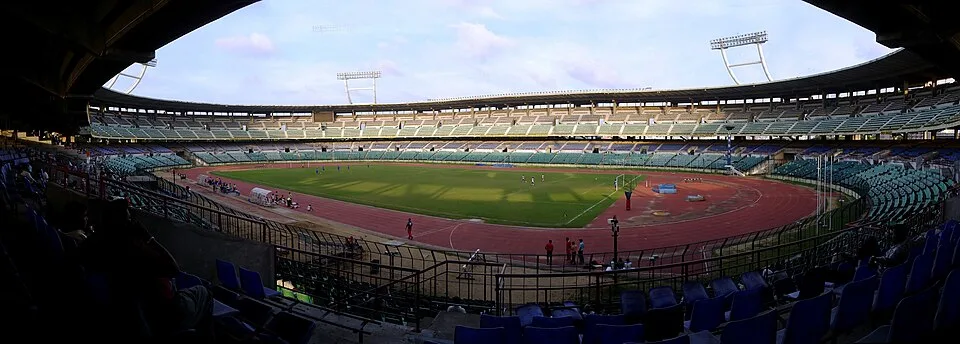
Ceremony venue and constitutional moment
On Sunday, 10 May 2026, Tamilaga Vettri Kazhagam (TVK) president C. Joseph Vijay—the actor widely known by his screen identity—took oath as Chief Minister of Tamil Nadu at the Jawaharlal Nehru Indoor Stadium in Chennai. Governor Rajendra Vishwanath Arlekar administered the oath of office and secrecy on a stage crowded with supporters and cameras, turning a sports arena into a ritual space for a transition many backers treated as cultural as much as constitutional.
What spectators saw on the stage
Eyewitness accounts describe Vijay in a black blazer and black trousers, smiling as he approached the podium. When he began the oath in Tamil—starting with the words “C. Joseph Vijay ennum naan…”—cheering and whistles rippled through the stands, signaling how tightly cinema-era fandom still overlaps with state-level politics. Congress leader Rahul Gandhi was reportedly seated on the dais, a visible reminder that TVK’s path to power ran through post-poll letters of support even though portfolio announcements would later exclude Congress ministers.
Electoral backdrop in two numbers
State reporting tied the mandate to the 23 April 2026 assembly poll: TVK competed broadly on its own ticket and, after counting stabilised, was credited with roughly 108 seats in the 234-member assembly—well short of the 118 simple-majority line—while drawing on the order of 1.7 crore votes out of about 4.9 crore polled. Governor Arlekar had appointed Vijay with instructions to seek a vote of confidence on or before 13 May 2026, compressing the interval between spectacle and procedural proof.
First speech: identity and discipline
In his first address after taking oath, Vijay—reported as age 51—leaned into modest biography rather than star glamour: he presented himself as a common man, not royal-born, with a self-description paraphrased in coverage as not an angel—only another citizen accountable on delivery—and invited voters to treat nicknames such as “Mama” (uncle) and “Thambi” (younger brother) as relational rather than hierarchical. He pledged an “era of real, secular, social justice” and promised not to trap citizens in false commitments, asking instead for reasonable time before judging delivery—a rhetorical mix of humility and scheduling leverage.
Governance metaphors that set tone
The line drawing widest immediate commentary was operational rather than poetic: there would be only one power centre—himself—so policy accountability would not fracture among unseen influencers. Paired with vows not to misappropriate public money and to conduct administration openly, that framing reads as a promise of centralized responsibility after a noisy coalition negotiation phase. He also floated a white paper on state finances, signalling forensic transparency before large spending promises.
Early administrative signatures
Briefings from the day indicated first executive moves aimed at visible welfare and security: extending free electricity up to 200 units for domestic consumers and ordering steps toward a dedicated force focused on women’s safety. Those choices marry headline-grabbing household economics with law-and-order branding—both measurable on short horizons should the opposition challenge him inside the assembly.
The other ceremony: council of ministers
Beyond the chief minister’s oath, reporting described nine ministers sworn in alongside Vijay, blending veteran figures with newer faces attached to TVK. Names circulating in day-one coverage included K. A. Sengottaiyan, Dr T. K. Prabhu, S. Keerthana, Aadhav Arjuna, N. Anand, R. Nirmal Kumar, and K. G. Arunraj—illustrating how TVK intends to pair organisational experience with younger legislators. The conspicuous gap—no Congress nominee inside the cabinet despite Congress having helped lift the alliance past the majority threshold—already seeds future bargaining tension.
Historical framing supporters emphasized
Commentary tied to the event portrayed May 2026 as the first time in roughly five decades that Tamil Nadu’s elected chief executive traceability broke the DMK–AIADMK duopoly script—an interpretive claim voters may test against patronage networks still anchored in older party machines.
Federal echo
Prime Minister Narendra Modi publicly congratulated the new chief minister and pledged cooperative Centre–state engagement—a diplomatic baseline whenever a regional bloc that relied on Congress signatures nonetheless aligns chiefly with TVK branding inside Fort St. George.
Bottom line
The May 10 tableau delivered ritual legitimacy—stadium oath, celebrity optics, ministerial bench—but the adjacent deadline for a confidence vote keeps politics in committee rooms as intensely as onstage. Vijay’s speech handed supporters slogans about unity of command and honest books; opponents will weaponize debt figures, alliance asymmetry, and any slip between promise paper and treasury reality.