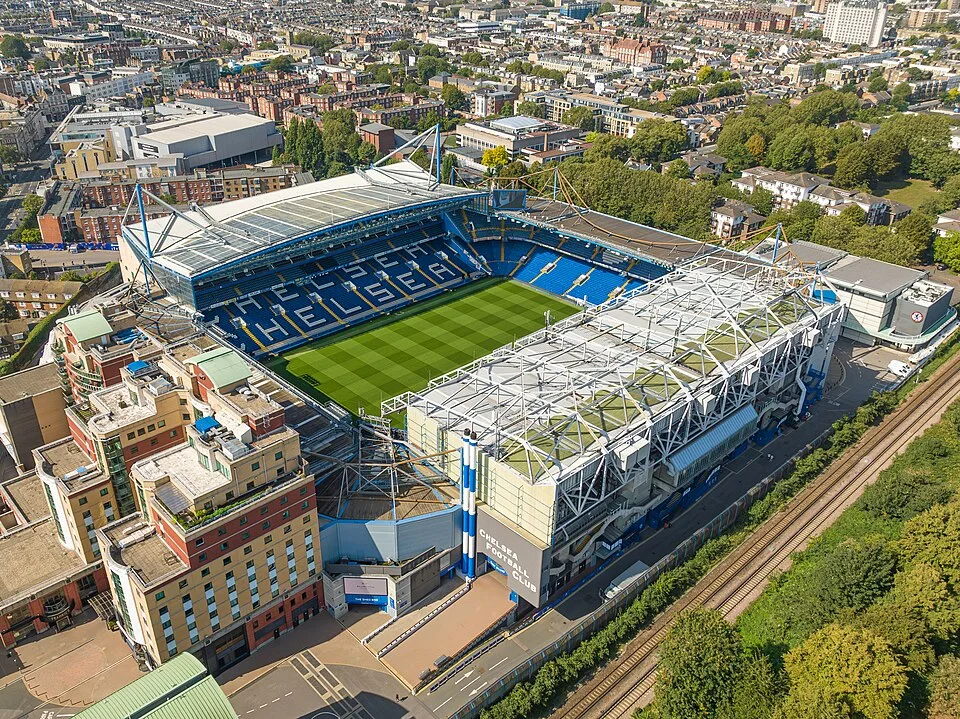
Why “Chelsea” pins west London on satellite feeds nobody rents anymore
Chelsea FC rides layered irony: the borough name evokes Georgian terraces and oligarch-era headlines in one breath; supporters chant beside Thames flood tides while overseas feeds abbreviate the club to three syllables of swagger. Premier League economics exported royal-blue kits before tourists learned Fulham Road traffic patterns.
1905 founding inside architecture already chasing spectators
Gus Mears and his brother Joseph inherited ambition along with an athletics enclosure—Stamford Bridge’s steel skeleton promised crowds if someone programmed Saturdays reliably. Association football supplied repeatable tenants where cycling clubs alone could not anchor amortisation; 10 March 1905, directors convened (club lore remembers pub tables opposite the stadium gates) to charter Chelsea Football Club rather than watch rival bids steal the lease narrative.
They chose Royal Blue shirts—clean contrast against London clay—and recruited John Robertson from Fulham when credibility mattered more than loyalty speeches. Early seasons climbed toward Football League admission (1905–06) once opponents tolerated journey times across marshy Thames bends.
Edwardian London layered steam trains beside omnibus routes—supporters carried tobacco smoke and cloth caps onto terraces where crush physics preceded regulation arithmetic. Interwar First Division flirtations mixed glamour trips with relegation humour; World War II paused leagues while Blitz geography spared Stamford Bridge complete erasure yet scarred surrounding streets.
Stamford Bridge as landlord asset before soul metaphors arrived
The stadium predates the institution yet sits inseparable from identity—West Stand rebuilds, Shed End mythology, Matthew Harding memorial acoustics—each renovation cycles debt schedules alongside acoustic nostalgia. 1990s all-seater conversion tracked Hillsborough-era law while architects chased UEFA hospitality tariffs.
Pitch geography hugs railways—commuter arteries feeding Kings Road expenditure myths older than Instagram swagger—yet gate geography always tethered identity to Fulham municipal wards rather than Chelsea bourgeois streets.
Neighbours who share SW6 traffic jams
Against Fulham, parish rivalry tracks river bends—friendly geography masks fierce derby economics when schedules align. Against Tottenham or Arsenal, north London noise imports television choreography; against West Ham, Thames-adjacent labour histories collide when fixtures rare enough feel like civic referendum.
Ownership chapters everyone argues past each other about
2003 marked inflection—foreign capital accelerated wage elasticity and trophy urgency before financial fair play debates colonised sports pages. Later consortium transitions reshaped boardrooms while supporters’ trusts debated voting rights versus trophy drought psychology.
Accounting cycles rarely sync with emotional patience—summer windows rewrite narratives faster than museum plaques update.
European nights that rewrote clip libraries
2012 Champions League final in Munich—penalty theatre after Roberto Di Matteo’s interim arc—compressed Chelsea mythology into one night’s chaos mathematics. 2021 Porto final under Thomas Tuchel added modern pressing lore to older resilience clichés; Europa League chapters filled seasons when league rhythm wobbled.
Benchmark dates clip editors still recycle
Verify honours against official club and UEFA tables—competition formats evolve.
- 1905 — Club founded at Stamford Bridge—Mears tenancy logic locks stadium and identity.
- 1907 — First FA Cup final appearance—early national spotlight.
- 1955 — First Division champions—post-war tactical discipline narrative.
- 1970 — FA Cup triumph—colour television aesthetics meet muddy Wembley mythology.
- 1997–2000 — FA Cup, League Cup, Cup Winners’ Cup clusters—Ruud Gullit/Gianluca Vialli cosmopolitan prelude.
- 2003 — Ownership transition—accelerated recruitment economics.
- 2004–2006 — José Mourinho league titles—defensive organisation meets headline vanity.
- 2012 — Champions League winners—Munich final penalties.
- 2021 — Champions League winners—Porto final under Tuchel.
- 2022 — Club sale headlines—new stewardship debates.
- 2020s — League volatility, European qualification arithmetic, ongoing stadium footprint debates—same river, faster news cadence.
Revenue versus followers—two instruments fans treat as one scoreboard
Totals below come from different snapshots: club revenue ties to 2024/25 reporting cycles in euros; follower totals aggregate official club accounts across major platforms using CIES methodology as of June 2024. Accounting seasons and social reach measure different hunger—merge them only if you enjoy pointless arguments.
| Metric | Value |
|---|---|
| Total revenue (€m, 2024/25 season, widely cited annual football finance surveys) | 584 |
| Combined social followers (millions, official accounts on Facebook, X, Instagram, TikTok—CIES June 2024) | 142 |
Trophies pundits weaponise every Monday morning
Chelsea’s statistical reputation accelerated after 2000—multiple Premier League titles across managerial eras plus domestic cups stacked beside European crowns (Champions League, Europa League) that reframed club narratives abroad.
Commercially, Stamford Bridge premium seating pairs with global documentary crews and touring summers—digital audiences amplify viral forwards regardless of league placement.
- Premier League: repeated championships across 2000s–2010s managerial cycles—each era carries distinct tactical signatures worth season-by-season verification.
- FA Cup / League Cup: volume comparable to peers—domestic knockouts remain narrative accelerators even when European qualification steals calendar oxygen.
- UEFA Champions League: 2012, 2021 finals anchor modern mythology—verify opponent and venue contexts before comparing across decades.
- Europa League: 2013, 2019 wins—continental trophies that doubled as Champions League qualification bridges.
- Women’s team: major domestic trophies expand brand narratives beyond men’s-only summaries.
- Audience scale: combined social footprint reflects satellite-era diaspora plus platform-native youth fans—the snapshot table reflects that tier.
After finance podcasts finish shouting
Chelsea is Mears ledger ink translated into royal-blue LED boards—Stamford Bridge steel remembers athletics horses before football studs. Next transfer window will embarrass last summer’s predictions; Fulham Road will still smell like fried onions because west London matchdays rarely schedule humility.