What changed
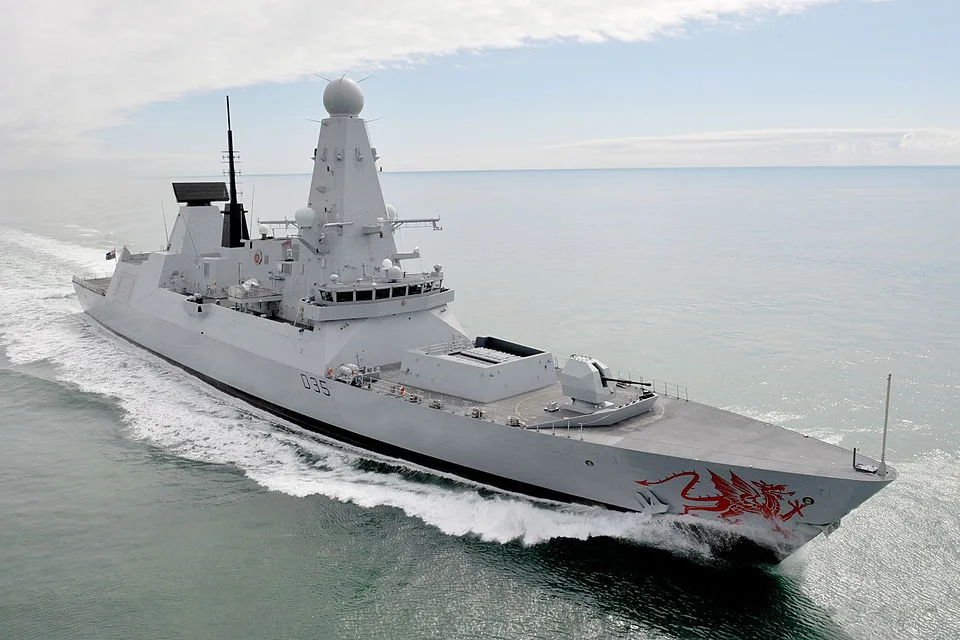
HMS Dragon, one of the Royal Navy’s Type 45 air-defence destroyers, is moving from the eastern Mediterranean toward the Middle East so it can pre-position for a possible multinational mission to protect commercial shipping through the Strait of Hormuz, according to UK reporting of a Ministry of Defence announcement.
The timing matters politically: Prime Minister Keir Starmer and French President Emmanuel Macron have been promoting a joint shipping-safety framework, but Starmer has also insisted the mission would proceed only when fighting in the region has ended—a caveat that keeps British forces one step removed from today’s hottest shooting while still answering insurance markets and allies who want a visible escort plan ready.
What the MoD said on the record
Coverage citing the MoD describes the notional Hormuz operation as “strictly defensive and independent” and the Dragon move as “part of prudent planning.” The language is careful: it signals availability (“could contribute immediately if needed”) without promising automatic participation in US or Israeli strike timelines.
Officials also stressed that Cyprus remains defended after earlier reinforcement, an implicit response to domestic criticism that Britain reacted slowly when the Iran crisis escalated. Dragon had been part of the eastern Med posture, including work tied to protecting UK air infrastructure after RAF Akrotiri faced drone damage—context that explains why pulling the ship east is a trade-off, not a cost-free gesture.
Why Hormuz dominates the economics story
Roughly a fifth of global oil and liquefied natural gas flows have been tied to the strait in widely cited industry shorthand. When passage is contested, freight rates, war-risk premiums, and consumer fuel charts move fast—even when physical shortages are still avoidable.
BBC reporting notes a US–Iran ceasefire from April but emphasizes that a durable settlement is unfinished, with both sides trading accusations about attacks in the strait during the same news cycle as Dragon’s deployment. That is the definition of fragile deterrence: enough quiet to plan convoys, not enough trust to treat the waterway as normal.
Capability: what a Type 45 adds
Type 45s are built around anti-air and anti-missile sensors and weapons—Sea Viper is the public shorthand—meant to shield task groups and high-value units from saturation threats. They are not minehunters; BBC notes RFA Lyme Bay is separately being fitted with autonomous mine-hunting kit for a possible later role, which hints at how a full UK package might combine layered defences if a coalition actually sails.
For readers comparing navies, Dragon’s redeployment also parallels France moving the Charles de Gaulle carrier group through Suez into the southern Red Sea, underscoring European willingness to show the flag even when Washington drives the loudest combat tempo.
Diplomatic geometry: UK, France, US, Iran
Starmer has repeated that the UK should not be “dragged” into the war, and BBC reporting recalls his resistance to backing a US blockade of Iranian ports that reportedly remains in place. That tension—alignment on freedom of navigation, distance from maximum-pressure tactics—will shape rules of engagement for any EU–UK led escort.
A 51-country diplomatic meeting, referenced in the same reporting cluster, illustrated appetite for collective shipping protection even as Tehran asserts leverage over transit. Any mission that survives contact with reality will need deconfliction channels; otherwise pre-positioned ships risk becoming tripwires.
What to watch next
Three indicators will tell whether Dragon’s move is symbolic or operational: whether Starmer’s “fighting ends” condition is treated as met; whether France and Britain publish a joint concept of operations with clear escort rules; and whether insurers and flag states actually route tankers under coalition cover rather than diverting around Africa.
Ship movements are easier to photograph than strategy. The decisive tests are political, not nautical.
Bottom line
HMS Dragon is sailing into a may-or-may-not mission: pre-positioned for a defensive Hormuz coalition championed with Paris, bounded by London’s insistence on ceasefire conditions, and nested inside a global energy chokepoint that still moves world markets. The deployment is real; the end state—stable convoys without renewed war—is still open.