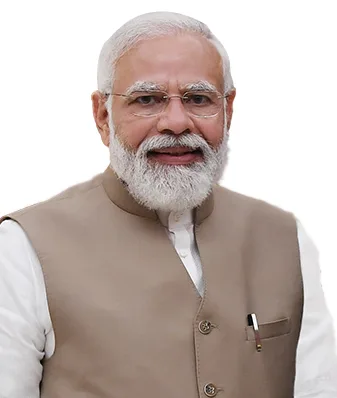
Prime Minister Narendra Modi has asked Indians to treat belt-tightening as part of national duty while the Middle East war keeps global energy prices elevated and the Strait of Hormuz—the narrow channel through which a large share of the world's seaborne oil normally flows—remains effectively closed to ordinary traffic after more than two and a half months (confirmed). Speaking at a public event in Hyderabad on Sunday, he linked working from home, public transport, carpooling, reduced gold buying, and curtailed foreign travel to saving foreign exchange: the dollars and other hard currencies the Reserve Bank of India needs to settle imports and stabilise the rupee. The message landed as traders repriced risk: on Monday, India's benchmark Sensex index fell more than 1,000 points in early trade (confirmed), with jewellers' and airlines' stocks among the notable losers.
What "tighten belts" means in this speech
Modi's appeal deliberately echoed the COVID-19 period, when large employers adopted remote work and video meetings at scale. He asked office-goers to revive those habits where possible, shift trips to metro rail and buses, and share car journeys to stretch each litre of petrol or diesel further—all demand-side levers that trim import volumes without waiting for new refineries or pipelines. He also urged households to pull back on gold purchases and on discretionary overseas travel, including destination weddings and holidays framed as luxury outflows of foreign currency.
To the farm sector, which depends on imported feedstock for fertiliser and on fuel for pumps and transport, he suggested cutting fertiliser application by about half (confirmed)—a sensitive ask in a country where crop yields and food price stability are political lightning rods. Taken together, the package is less a single austerity decree than a moral-economy broadcast: shifting some of the adjustment burden from the state budget and state-run fuel retailers onto everyday choices, at least until diplomacy or logistics reopen cheaper barrels.
Why the Gulf shock hits India's external accounts hard
India imports on the order of nine-tenths of the oil it consumes (confirmed), so any sustained disruption to Gulf liftings or tanker insurance costs feeds straight into the trade deficit and the current account—the broad measure of how much the country borrows from the rest of the world to pay for imports not covered by exports. Roughly half of India's crude imports, a majority of its liquefied natural gas, and almost all of its liquefied petroleum gas (bottled cooking fuel) have typically transited Hormuz in peacetime routing (confirmed), which is why a blockade there is not a distant headline for Mumbai or Bengaluru but a line item on the import bill.
Official data cited in market commentary put spending on crude and petroleum products at about $174.9 billion in the financial year ended March 2026, roughly one-fifth of all imports (confirmed from government trade documentation summarised in business reporting). Gold, another Modi target, is the other big discretionary import households reach for when savings need a hard store of value—exactly the habit that becomes expensive when the rupee weakens. The International Energy Agency has characterised the present disruption as the largest supply shock on record in volume terms (confirmed), which helps explain why New Delhi is willing to use prime-ministerial bandwidth on behaviour nudges more commonly associated with wartime or balance-of-payments stress.
How equity markets read the message
Equity investors treated the speech as a signal that private consumption and corporate margins could face a longer squeeze than the fuel-price freeze at the pump alone had implied. Beyond the Sensex move, jewellers' shares fell sharply—Titan, a large branded jewellery play, was down nearly 6 % in early Monday trading, with the sector off as much as 10 % in some names (confirmed). IndiGo, India's biggest airline by domestic share and an aggressive international expander, slipped about 2.8 % (confirmed), consistent with fears that jet fuel costs and softer outbound tourism could intersect ugly.
Analyst commentary carried in wire summaries described the prime ministerial appeal as the most drastic public conservation messaging of the crisis so far (reported). That matters for markets because it raises the probability of follow-on administrative measures—mandatory work-from-home days in government offices, tighter travel approvals for officials, or eventual pump-price realignments—rather than leaving adjustment entirely to voluntary restraint. Until such details exist, price discovery will stay volatile.
Rupee pressure, jobs in trade-exposed industries, and food risk
The rupee has been trading near record lows against the dollar in recent weeks (confirmed), which mechanically raises the rupee cost of every dollar-denominated barrel and amplifies imported inflation even when local pump prices are administratively smoothed. New Delhi has so far avoided passing the full crude spike through to retail petrol and diesel, leaning instead on tax cuts and balance-sheet absorption at oil marketing companies—a choice that protects households briefly but concentrates strain on public-sector finances and corporate credit.
Beyond abstract macro numbers, reporting from the past week points to hundreds of thousands of jobs at risk in glass, plastic, and tile plants that are energy- and gas-intensive (confirmed). Separately, tighter fertiliser availability has raised worries about lower farm output and higher food prices (confirmed)—the channel through which a Gulf war can jump from business pages to kitchen tables even for voters who never fill a private car.
Opposition parties frame it as burden-shifting
Congress leader Rahul Gandhi responded that the government was shifting responsibility onto ordinary people and avoiding its own accountability, posting on social media that Modi's suggestions were "proofs of failure" rather than neutral advice (confirmed). That line will resonate in a Lok Sabha system where fuel prices, LPG cylinder costs, and onion inflation have repeatedly moved votes.
The government's counter-narrative—visible in Modi's own phrasing—is that patriotism in a supply crisis includes "living responsibly" in daily consumption, not only military sacrifice (confirmed, direct quote). The tension between those two frames—shared national sacrifice versus outsourcing adjustment to households—will shape state-level VAT politics on fuel and the spring policy calendar as ministries decide how much fiscal room remains to shield OMCs without spooking bond markets.
Regional peers are experimenting with their own shock absorbers
India is not the only Asian economy improvising. China reportedly ordered refiners to curb fuel exports temporarily to prioritise the domestic market; Australian states have experimented with free or half-price public transport to keep cars off the road; the Philippines declared a national emergency in March with subsidies and shorter public-service weeks; Sri Lanka turned to fuel rationing and compressed work weeks when dollars ran short (confirmed summaries of international responses). None of those templates maps one-to-one onto India's federal structure, but they show the menu from which New Delhi might borrow if voluntary restraint proves insufficient.
For now, Modi has chosen the lightest-touch item on that menu—rhetoric and social norm—while keeping the hardest choices (rationing, large pump hikes, universal transport subsidies) in reserve. Whether that sequencing buys enough foreign exchange runway depends on how long Hormuz stays a war zone and whether diplomacy can reopen a credible ceasefire corridor for tankers.
What to watch next
Wire reporting suggests analysts expect explicit conservation directives for government and possibly larger corporate employers, alongside continued speculation about a retail fuel price reset if global benchmarks stay elevated (reported). Desk indicators to track are weekly forex reserve releases, monthly trade data for gold and crude volumes, and any state-level moves on bus and metro fares that would show coordination beyond speechmaking.
On the geopolitical side, the same weekend brought Washington's rejection of Tehran's latest counterproposal on the war's terms, which kept risk premiums in oil markets from unwinding. Until cargoes can move through the Gulf without war-risk pricing that overwhelms refiners' margins, Modi's belt-tightening theme is likely to remain standing policy guidance—whether or not households enjoy hearing it.