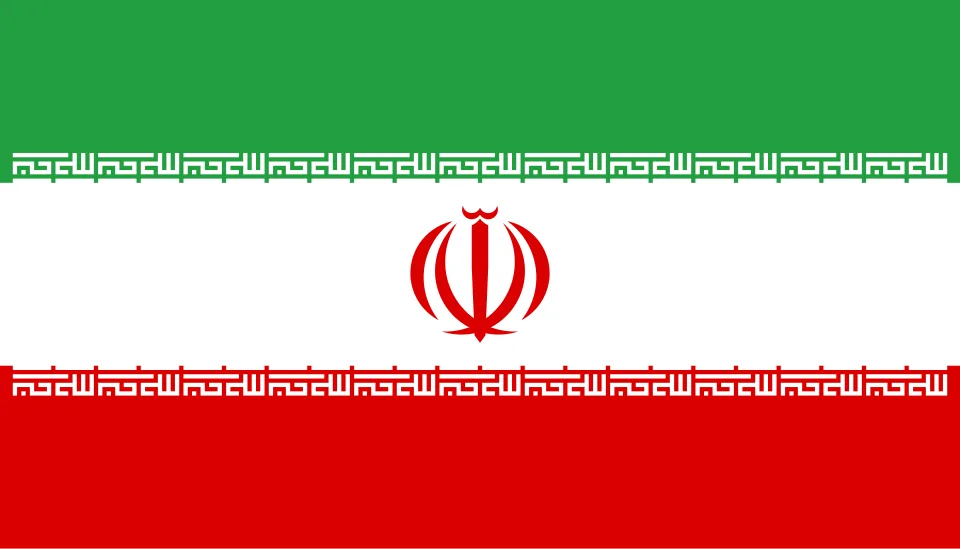
US President Donald Trump rejected Iran's 14-point counterproposal on May 10, posting on Truth Social that he had read the response from Iran's "so-called 'Representatives'" and found it "TOTALLY UNACCEPTABLE!" (confirmed), leaving the April 7 ceasefire framework under renewed strain as both sides remain deadlocked over the Strait of Hormuz and Iran's nuclear stockpile — a position Israeli Prime Minister Benjamin Netanyahu reinforced the same weekend by stating the war is "not over" until enriched uranium is removed.
Trump rejects Iran's counterproposal
Trump's May 10 post followed Iran's submission of a 14-point response delivered through Pakistani mediators, according to reporting from Al Jazeera and Fortune. The Iranian document proposed resolving all issues and ending the war within 30 days — rejecting the longer ceasefire extension Washington had floated — while bundling economic, territorial, and security demands that US officials immediately labelled non-starters. Trump provided no details on next steps and did not indicate whether air strikes would resume.
Iran's counterproposal (reported) sought war reparations, full sovereignty over the Strait of Hormuz with an end to the US naval blockade, release of frozen Iranian assets, and lifting of all sanctions. On the nuclear file, Tehran rejected dismantlement of enrichment sites, instead offering to dilute some highly enriched uranium and transfer the remainder to a third country — a position short of the complete abandonment Washington has demanded since talks began.
What each side is putting on the table
Washington's core terms have remained consistent: Iran must abandon its uranium enrichment program, surrender or remove existing highly enriched stockpiles, and accept that the Strait of Hormuz remains open to all shipping under international law with continued US Navy presence. Anything short of that, Trump has said, will be treated as a refusal to end the war.
Tehran's 14-point document (reported via Al Jazeera and TRT World) also included guarantees against future US military aggression, withdrawal of US forces from Iran's periphery, and an end to fighting in Lebanon. On nuclear, Iran proposed a time-limited suspension of enrichment rather than the 20-year dismantlement the US had sought. Both sides understand the gap is not negotiating room — it is the fundamental shape of any deal.
Hormuz: leverage that neither side will concede
The Strait of Hormuz remains the central physical chokepoint. It carries roughly 20 % of the world's seaborne crude (confirmed) and the bulk of LNG bound for Japan, South Korea, and southern Europe. A formal closure or sustained disruption would force tankers around the Cape of Good Hope, adding two weeks to voyages and a double-digit percentage to spot freight rates. That is the leverage Iran holds; that is the leverage the United States has signalled it will not negotiate away.
US warships have maintained an interdiction presence in the Gulf, intercepting Iran-linked vessels as part of the naval blockade that Iran has demanded be lifted. The underlying pattern is clear: neither command structure has fully honoured the no-fire understanding the April framework was built on, even as both sides avoid crossing the threshold that would formally collapse the truce.
Nuclear deadlock with Israel watching
Israeli Prime Minister Benjamin Netanyahu told CBS News' "60 Minutes" on May 10 that the war is "not over" so long as Iran retains its enriched-uranium stockpile and the underground enrichment halls at Natanz and Fordow (confirmed). He stated that an agreement would be the best approach to remove the uranium, but added that Israel reserves the right to act if Washington-led diplomacy stalls — a meaningful pressure point on Trump from his closest regional ally.
For Iran, ceding enrichment hardware is not just a security question — it is a political one. Supreme Leader Ali Khamenei has framed the enrichment infrastructure as a sovereign achievement repeatedly through state media, and the Islamic Revolutionary Guard Corps has tied its institutional credibility to it. Tehran's read is that dismantling now would be heard at home as surrender, and the post-war elite contest leaves no leader willing to wear that cost. The deadlock is structural.
Oil markets price the uncertainty
Brent crude has firmed on the assumption that Trump's rejection raised the probability of formal collapse, and war-risk premiums quoted out of the Lloyd's of London market have been lifted for Gulf transit. Major shippers including the largest Asia-Europe carriers are quietly modelling re-routing scenarios that would add seven-figure costs per voyage on the Asia-Europe trade lane.
Asian and European refiners — the most exposed to Hormuz flow — have been drawing down strategic petroleum reserves more aggressively than at any point since 2022, a defensive measure that buys a window of weeks before retail fuel prices in Tokyo, Seoul, Rotterdam, and Genoa would begin to climb noticeably. The longer the ceasefire remains in limbo without either formally collapsing or being shored up, the more those reserves bleed.
What to watch next
The next inflection points are short. Pakistani mediators who delivered Iran's 14-point response are expected to attempt another round. If that produces no give on either nuclear safeguards or sanctions sequencing, expect the United States to lean on its Fifth Fleet posture in Bahrain rather than re-open large-scale strikes — a calibrated pressure move that preserves the option of a deal while raising costs on Iran's IRGC Navy.
The fastest path to formal collapse would be a casualty event: an Iran-linked vessel sinking a US-flagged or US-allied commercial ship, or an Iranian missile killing civilians or US personnel in the region. Either would force Trump's hand within hours. Until then, the ceasefire holds in the technical sense that no side has formally renounced it — even as the practical lines around it keep being tested.