Why PSG is debated as loudly as it is watched
Paris Saint-Germain invites argument because it sells simultaneity: capital-city glamour, Gulf-backed squad inflation, fashion-brand collaborations, and domestic dominance that can look inevitable on spreadsheets yet fragile in knockout football. Supporters frame the club as proof Paris belongs among Europe’s elite; critics frame it as soft power with studs—either way, neutral viewers rarely ignore matchday graphics.
Origins — 1970 merger, capital ambition, and the Parc move
PSG was chartered 12 August 1970 through a merger engineered to give Paris a stable top-flight identity after years of fracture—Paris FC (linked to municipal backing and administrative football politics) joined forces with Stade Saint-Germanois, the side rooted in Saint-Germain-en-Laye west of Paris. The compromise blended suburban roots with metropolitan branding: Paris Saint-Germain—a name that kept regional lineage while advertising the capital on weekend television listings.
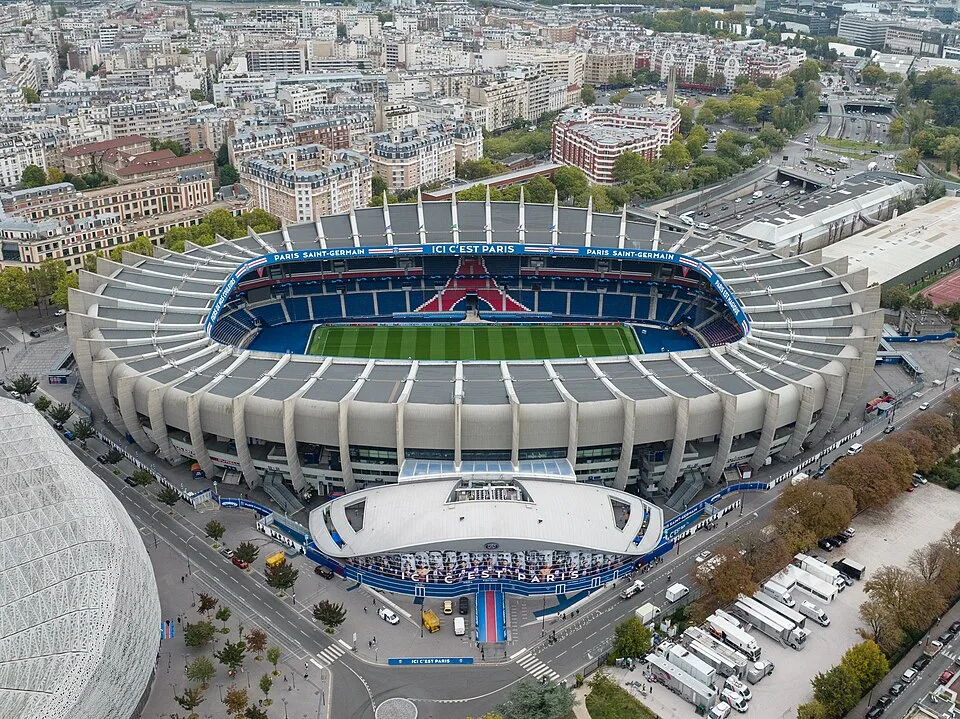
Early seasons oscillated between divisions and stadium nomadism—Stade Municipal Georges Lefèvre, Stade Jean-Bouin, Stade des Glacières—until economics and crowd safety pushed consolidation. July 1974 brought tenancy at the Parc des Princes—16th arrondissement architecture already mythologised by rugby and rock concerts—giving PSG a fixed cathedral when casual fans still treated French club football as provincial theatre.
The 1980s cult teams (Luis Fernández, Safet Sušić, terrace poetry around Boulogne and Auteuil) hardened identity before satellite television globalised Ligue 1 images; 1990s Brazilian flair (Rai, Leonardo) fed highlight reels that taught overseas audiences to pronounce Parc correctly.
Qatari-era acceleration and the celebrity-football economy
2011’s change of ownership trajectory—Qatar Sports Investments—rebased recruitment on wage elasticity Paris could not previously afford: Ibrahimović, Neymar, Mbappé, Messi chapters turned transfer windows into entertainment verticals. Broadcasters captured training-ground drone shots; sponsors staged runway aesthetics beside tactics boards.
European knockouts became referendum seasons: domestic doubles could feel routine while a single May night in Lisbon or Manchester rewrote board narratives. Financial fair play debates, loan arrangements, and stadium rent negotiations stayed front-page in France even when league tables looked sealed by winter.
Ultras, politics, and the capital’s football ecology
Boulogne versus Auteuil terrace histories include violence and suppression campaigns—French state football policing intersected with club bans and reorganisations. Against Marseille, Le Classique maps north-south cultural rivalry onto television slots bigger than many cup finals. Within Île-de-France, smaller clubs resent resource gravity—every PSG slip becomes schadenfreude copy.
Timeline — milestones still cited in searches
Verify trophy totals season-by-season; domestic cups rename with sponsors.
- 1970 — Club founded via merger; Paris seeks consolidated elite identity.
- 1974 — Parc des Princes becomes home; attendance psychology shifts from itinerant grounds.
- 1982 — Coupe de France win anchors early trophy credibility.
- 1996 — UEFA Cup Winners’ Cup — Bruno Ngotty final vs Rapid Wien delivers first major continental trophy.
- 2011 — QSI ownership accelerates wage scale and global marketing.
- 2015–2024 — Domestic dominance stretches with Mbappé core; repeated Ligue 1 titles stack.
- 2020 — Champions League final in Lisbon—club reaches European showcase match (result enters rival lore).
- 2020s — Stadium renovation talks, superstar cycles, Ligue 1 rights volatility—revenue tied to broadcast economics as much as trophies.
Snapshot — numbers readers actually compare
Totals below come from different snapshots: club revenue is tied to 2024/25 reporting cycles in euros; follower totals aggregate official club accounts across major platforms using CIES methodology as of June 2024. They are not interchangeable—one is accounting, the other is audience reach.
| Metric | Value |
|---|---|
| Total revenue (€m, 2024/25 season, widely cited annual football finance surveys) | 837 |
| Combined social followers (millions, official accounts on Facebook, X, Instagram, TikTok—CIES June 2024) | 184 |
Achievements and standout stats
French league nomenclature shifts—always confirm tables before citing streaks. PSG’s statistical identity stacks Ligue 1 titles in the Qatari era with deep runs in domestic cups; European nights remain the prestige gap analysts measure against wage bills.
Commercially, PSG sits where luxury sponsors meet athlete influencers—streetwear drops and documentary crews belong to the same revenue thesis as hospitality tiers.
- Domestic dominance: repeated Ligue 1 crowns and Coupe de France volume since investment cycles accelerated—often discussed as competitive imbalance inside France.
- European peak (to date): UEFA Champions League final appearance (2020) stands as the flagship continental showcase—proof of arrival at the last stage even when silverware there remains the open chapter for rivals to taunt.
- Coupe de France / super cups: trophy cabinets thicken annually—season doubles and trebles remain marketing shorthand.
- Parc des Princes footprint: mid-forty-thousand seating band—intimate by mega-bowl standards yet premium-priced inside Paris real-estate gravity.
- Commercial and audience scale: major football finance surveys and social-audience studies place PSG among the largest clubs on revenue and combined platform followers—the snapshot table reflects that weight class.
Bottom line
PSG’s arc is merger pragmatism plus capital-city staging plus Gulf-era acceleration. Hold domestic inevitability, European volatility, and brand economics as separate lenses—or arguments confuse runway campaigns with defensive transitions. Next summer’s squad churn will rewrite talking points again—but the Parc lights stay on.