What Putin said in Moscow
During an extraordinary evening press conference after Russia’s Victory Day commemorations on 9 May 2026, President Vladimir Putin framed peacemaking as fundamentally bilateral—“a peaceful solution … is a matter for Ukraine and Russia”—while leaving space for outside facilitation: help would be welcomed from actors who had not built careers on anti-Russian vitriol.
That formulation arrived while Washington still marketed short battlefield pauses—including truces measured in three-day increments—and prisoner exchanges numbered in four-figure batches, context that makes Putin’s elevation of a German elder statesman partly about contrasting American transactional ceasefires with imagined Continental stamina for grinding diplomacy.
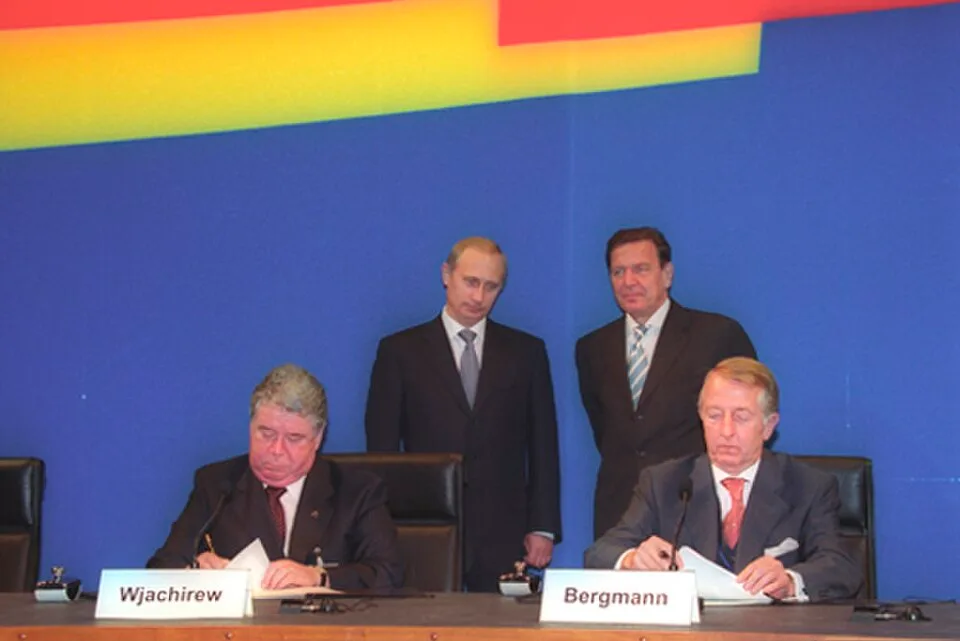
In answer to questions about European channels, he elevated former German Chancellor Gerhard Schröder, saying he would prefer talks with Schröder over other continental politicians—a sentence syndicated across German and Swiss wires with identical thrust if slightly different English glosses.
The quoted preference (language nuance)
German-language transcripts rendered the preference line along the lines of: “Of all European politicians, I would prefer talks with Schröder.” Secondary reporting paired that headline with another filter: Putin reportedly argued any mediator should be someone who had not distinguished themselves through nastiness toward Russia—rhetoric aimed simultaneously at disqualifying hawkish voices and at flattering Schröder’s decades-long branding as a dialogue-first Social Democrat.
Immediate reaction from Schröder’s circle
Journalists reaching Schröder—now 82—received a disciplined no comment, maintaining ambiguity about whether the former chancellor welcomes Putin’s spotlight or fears becoming a wedge inside Germany’s governing coalition. Silence leaves analysts guessing whether SPD leadership will treat him as a liability or—when expedient—a deniable backchannel.
Why Berlin cannot simply embrace the idea
The federal government does not issue medals for unofficial envoys: diplomacy remains the constitutional preserve of the foreign ministry and chancellery. Schröder’s lucrative past chairmanships around Nord Stream ventures mean every headline revives accusations that energy patronage blurred ethical lines—charges Schröder supporters counter by citing recent essays acknowledging Russia’s February 2022 invasion as unlawful under international law while still rejecting total demonisation of Russian society.
Separate facts pattern: shuttle diplomacy already underway
Investigative reporting published alongside the Victory Day news cycle described Schröder undertaking discreet legs—first a Kremlin conversation characterised as intense, then discussions with Russia’s chief ceasefire negotiator Vladimir Medinsky, followed by Istanbul contacts with Ukrainian politician Rustem Umerov. Narratives differ on initiation—sources mentioned Ukrainian intermediaries and historic publisher ties—but converge on a core point: Schröder moves without a stamped mandate from Berlin, stretching the definition of elder statesmanship into freelance crisis entrepreneurship.
Those conversations reportedly recycled stale negotiating staples—status of occupied districts and NATO membership horizons—demonstrating how celebrity intermediaries cannot shortcut structural disagreements simply because dinner-party familiarity exists with Putin.
Domestic SPD jitters
Germany’s ruling Social Democrats initially reacted frostily to headlines about unsanctioned travel, yet faction voices later surfaced hopeful statements that productive conversations—not photo ops—might shrink casualty counts. That tonal swing illustrates coalition trauma: wanting leverage without owning Schröder’s optics.
How this intersects broader diplomatic chatter
Parallel tracks remain crowded: Washington continues pitching ceasefires and prisoner swaps; EU figures publicly muse about eventual engagement realism while insisting nothing should derail Ukraine’s territorial priorities in rhetoric if not battlefield outcomes. Putin simultaneously reiterated readiness for Volodymyr Zelensky talks—often packaged with iron demands about meeting venues—that keeps sovereign equality debates combustible.
Wire summaries from the same news window quoted Putin insisting anyone wanting a bilateral summit must travel to Moscow, while allowing hypothetically neutral venues only once a durable peace framework exists—conditions Kyiv treats as non-starters because they imply legitimacy deficits before bargaining chips clarify.
European Council messaging—highlighted in continental coverage—stressed preparing for eventual dialogue without pretending Brussels can substitute for Ukrainian consent, threading a needle between strategic realism and alliance solidarity.
Bottom line
Naming Schröder is less a job offer than a rhetorical wedge—rewarding an old friend while signalling that Moscow still thinks in Berlin–Paris–Brussels triangles even as armour disappears from Red Square. Whether Schröder translation yields ceasefire momentum or merely domestic German turmoil depends less on Putin’s compliments than on verifiable military restraint—something press-conference flattery cannot manufacture.
Watch next for tangible signals: lowered artillery tempo sustained beyond holiday truces, reciprocated prisoner releases, and written frameworks—not televised niceties about preferred dialogue partners—because reputational rehabilitation travels cheaper than armour but buys nothing at zero verified compliance.