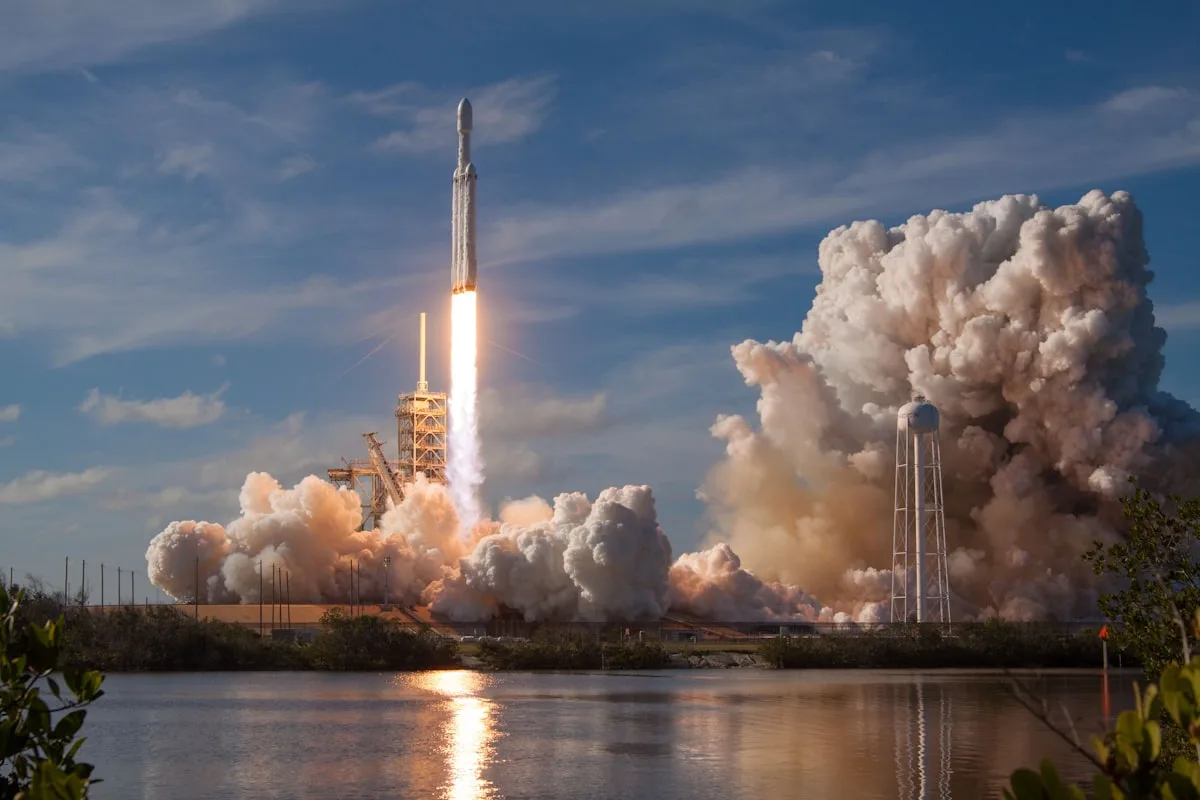
NASA’s 34th Commercial Resupply Services (CRS) contract flight with SpaceX left Earth on Friday 15 May 2026 when a Falcon 9 rose from Space Launch Complex 40 at Cape Canaveral Space Force Station, Florida, at 6:05 p.m. EDT, according to NASA headquarters release 26-039. The stack carried a Cargo Dragon loaded with “nearly 6,500 pounds” of pressurized and unpressurized logistics for the International Space Station’s Expedition 74 crew—everything from food and filter cartridges to radiation dosimeters and science hardware that will ride back in the trunk after on-orbit robotic extraction.
Weather delays before the Friday window
Independent launch media, including Spaceflight Now, chronicled consecutive scrubs earlier in the week when cumulus cloud rules and electric-field constraints violated Eastern Range safety margins—routine for Florida sea-breeze season but nerve-wracking for principal investigators whose cells were already fueled inside cold stowage bags. Holding the count preserved booster thermal margins and avoided propellant unload cycles that can stress composite overwrapped pressure vessels on the second stage.
Rendezvous plan: Harmony forward port
NASA expects Dragon to “autonomously dock at about 7 a.m. Sunday, May 17” to the forward port of the Harmony module—an Earth-facing berthing node that has hosted Commercial Crew vehicles and previous CRS capsules alike. NASA+, YouTube, and partner streams carried rendezvous coverage beginning 5:30 a.m. EDT the same morning for audiences tracking proximity operations milestones: abort holds, 350-meter holds, and the final soft capture ring engagement.
Science manifest highlights NASA emphasised
The agency’s release spotlights several investigations: STORIE (Storm Time O+ Ring current Imaging Evolution), a heliophysics package aimed at Earth’s ring current and space weather effects on power grids and satellites; hardware to judge how faithfully ground-based microgravity simulators mimic true free-fall; a wood-derived bone scaffold experiment targeting osteoporosis-like pathologies; physiology gear to track red blood cell and spleen adaptations; a planetary science investigation into dust accretion physics; and CLARREO Pathfinder-related instrumentation for high-accuracy reflected sunlight measurements involving Earth and the Moon. Each rides inside a logistics chain that threads Payloads Operations in Huntsville, Johnson’s Increment leads, and CADMOS in Toulouse for European co-investigators.
Mission tempo and Pacific splashdown
Dragon is slated to stay berthed until “mid-June,” then depart with time-sensitive samples—often cryogenic RNA preps or protein crystal trays—before splashdown “off the coast of California,” where fast boats from SpaceX’s recovery fleet race to stabilize the capsule ahead of salt spray intrusion. That Pacific landing corridor trades Atlantic convenience for gentler sea states in late spring and keeps overflight debris footprints away from European airways.
Vehicle notes: Cargo Dragon under CRS-2 contract line
NASA’s CRS-2 follow-on contracts—awarded after the original CRS block—pay for Dragon 2-heritage cargo vehicles with docking adapters rather than the older Canadarm2 berthing choreography used in the CRS-1 era. Autonomous GN&C stacks handle Hill-sphere approach with crew override capability from Cupola workstations, shrinking hands-on monitoring hours compared with HTV-style captures. Trunk payloads still depend on SSRMS operations days after hard mate when ROBO controllers unstow solar-shield or heliophysics pallets.
Booster recovery and range rhythm
Launch press trackers including Spaceflight Now identified the Falcon 9 first stage as B1096 on its sixth flight—if accurate, it underscores SpaceX’s cadence of rapid refurbishment between ASDS landings on A Shortfall of Gravitas or Just Read the Instructions, depending on trajectory dogleg selections that protect Bahamas airspace. Each successful RTLS or downrange return frees manufacturing capacity for Starship test articles, even though CRS missions themselves still fly Falcon 9 Block 5 hardware exclusively.
Expedition 74 operations backdrop
Expedition 74 crews balance Dragon arrivals with Russian segment maintenance, EVA battery retrofits, and commercial payload handover checklists. A mid-May logistics flight helps close manifest gaps before summer beta-angle periods complicate plane-change logistics. Payloads delivered now often feed autumn conference abstract deadlines for microgravity combustion and cardiac organoid teams.
Commercial resupply in the Artemis era
CRS-34 is one tile in NASA’s LEO commercialization strategy: keep ISS stocked while Axiom modules and CLD winners prototype post-ISS destinations. Falcon 9 reusability—often sixth or higher flights for veteran boosters—compresses marginal cost per kilogram to LEO, freeing budget lines for Gateway logistics and Human Landing System tests even when Congress caps ISS outyear funding.
What flight followers should monitor
- ISS beta angle cutouts that can slide docking TIG by orbits.
- SpaceX FCC special temporary authority filings for recovery telemetry.
- NASA Office of Inspector General audits on CRS pricing escalators—background noise but budget-relevant.
- Crew EVA schedules; Dragon arrivals sometimes defer airlock prebreathe blocks.
Bottom line
CRS-34 is airborne: Falcon 9 from SLC-40, Dragon laden with ~6,500 lb of station cargo, docking Harmony forward on 17 May 2026 per NASA’s plan, and Pacific return targeted weeks later. The manifest blends crew comfort with cutting-edge heliophysics and biomedical hardware—another proof that low Earth orbit remains a national laboratory even as Moon landings dominate marquee speeches.