Why Barça lives rent-free in global search
FC Barcelona is where Catalan identity, presidential soap opera, and positional-play aesthetics meet English-language debates about “philosophy.” Supporters treat membership (soci) as civic participation; neutrals treat highlight reels as football education. Broadcasters treat El Clásico as a quarterly advertising holiday even when the league table looks lopsided.
Origins: Gamper, Catalonia, and més que un club
Joan Gamper (also remembered as Hans Gamper)—Swiss-born and rooted in Barcelona’s late-19th-century sporting circles—helped convene the club through an advertisement inviting interested athletes to meet. On 29 November 1899, a small group gathered at the Gimnasio Solé on Carrer Montjuïc del Carme; roughly a dozen founding figures shaped the minutes—mixed Swiss, English, Catalan, and Spanish backgrounds—reflecting Barcelona’s port-city cosmopolitanism more than a single “British colony” side.
Walter Wild became the club’s first president; Gamper himself captained and bankrolled early cycles when amateur football still meant improvised pitches and borrowed kits. The founders wanted an association-football club anchored in Barcelona rather than a transient expatriate hobby—an ambition that would later make Barça a civic reference point, not only a weekend pastime.
Colours settled into blue and deep red (blaugrana)—a palette fans link (with varying degrees of folklore) to Basel’s tones and to early Swiss-British sporting exchange—while play absorbed Scottish-style passing brought by itinerant players and coaches. Early homes included tight urban grounds—starting near Carrer Industria—before later moves toward larger bowls as crowds grew through industrial Catalonia’s leisure boom.
Socially, the club emerged as organised football spread from British trading networks into Mediterranean cities: factory shifts, neighbourhood rivalries, and Catalan cultural revival (Renaixença) framed sport as modern identity. Across the 20th century—especially under dictatorship—the club carried Catalan language and symbols in ways few rivals matched; the slogan més que un club later crystallised that burden: sporting decisions can read as civic stance, so failures sting publicly as well as athletically.
Camp Nou, Espai Barça, and the stadium as balance sheet
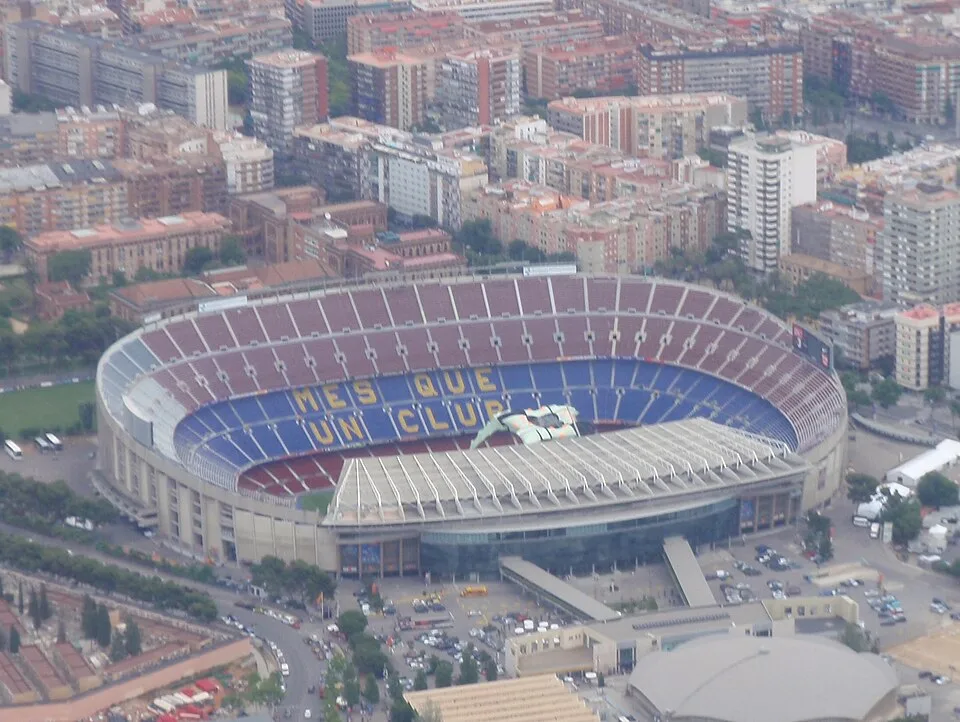
The Camp Nou opened in 1957 and became one of Europe’s largest football theatres by seating—tourism, concerts, and museum traffic matter as much as league points when discussing revenue resilience. Long-running renovation and capacity plans (names and sponsors change) tie directly to debt schedules and timing of cash flows—topics board candidates argue about with spreadsheets open.
Stadium scale changes acoustics: on European nights, the crowd’s texture shifts between local season-ticket holders and visitors whose first Barça experience is a purchased tour plus one match. Neither group is “wrong,” but they hear different versions of the same anthem.
Style exports: Cruyff, Guardiola, and the academy romance
La Masia is both a building and a philosophy myth—technical players taught to scan early and combine in tight spaces. Johan Cruyff as player and coach, Pep Guardiola’s era of intense pressing-and-possession, and later cycles (Messi–Xavi–Iniesta lore) turned Barça into a global synonym for a certain idea of football—even when budgets or injuries force more direct play.
The honest tension: romantic football costs elite wages; academy cycles ebb; rivals adapt tactically. Supporters debate whether a signing “feels Barça” the way Madridistas debate galácticos—different vocabulary, similar anxiety.
El Clásico and the rivalry economy
Against Real Madrid, two fixtures per season routinely pull global audiences that dwarf almost every other club match calendar. The football can be cagey or wild; the economic footprint is predictable—rights fees, gambling markets, clip economies, and endless debate panels.
Domestically, derbies with Espanyol carry city geography and identity subplots; Europe adds another register entirely—comebacks, referee storms, and comeback narratives that feed myth even when xG maps look ordinary.
Timeline — milestones still cited in searches
Treat this as orientation; trophy definitions change with formats and accounting years.
- 29 November 1899 — Founding meeting; Gamper anchors the origin story.
- 1957 — Camp Nou opens; capacity becomes part of the club’s competitive identity.
- 1979 — La Masia residential academy launches; later shorthand for Cruyff–Guardiola football identity.
- 1988 — Johan Cruyff returns as coach; positional play and academy integration accelerate.
- 1992 — First European Cup/Champions League at Wembley—Dream Team shorthand enters football culture.
- 2008–2012 — Pep Guardiola cycle; 2009 six-trophy calendar year becomes marketing scripture (definitions of “major” trophies vary).
- 2015 — Second treble season under Luis Enrique—Berlin final as capstone for an MSN-era peak.
- August 2021 — Lionel Messi departs amid registration and salary-cap constraints—symbolic chapter break for many supporters.
- 2020s — Espai Barça construction and squad transitions continue; revenue recovery tracks stadium progress and on-pitch consistency.
Snapshot — numbers readers actually compare
Totals below come from different snapshots: club revenue is tied to 2024/25 reporting cycles in euros; follower totals aggregate official club accounts across major platforms using CIES methodology as of June 2024. They are not interchangeable—one is accounting, the other is audience reach.
| Metric | Value |
|---|---|
| Total revenue (€m, 2024/25 season, widely cited annual football finance surveys) | 975 |
| Combined social followers (millions, official accounts on Facebook, X, Instagram, TikTok—CIES June 2024) | 361 |
Achievements and standout stats
Cup and league totals move every season—confirm dates with official tables before treating any trophy tally as permanent tattoo material. Barcelona’s reputation stacks deep domestic success in Spain with repeated European peaks in the modern Champions League era.
Economically, Barça belongs beside the handful of clubs whose stadium construction timelines and broadcast shares move analysts’ models—especially when comparing commercial growth to wage-bill reality.
- European peaks: multiple UEFA Champions League triumphs across the 1990s, 2000s, and 2010s—often bundled in fan memory with Cruyff, Guardiola, and MSN-era football.
- Domestic trophies: among Spain’s most decorated clubs in league and cup competitions—every season begins with title expectations, not mere participation.
- La Masia graduates: historic reliance on academy graduates for first-team minutes—continuity fans treat as identity even when transfer markets surge.
- Camp Nou scale: long Europe’s largest-seating football bowl by capacity—renovation plans aim to keep attendance economics at the very top tier globally.
- Commercial and audience scale: major football finance surveys and social-audience studies routinely place Barcelona among the largest clubs on revenue and combined platform followers—the snapshot table above reflects that tier.
Bottom line
Barcelona’s narrative is identity politics plus academy ideology plus knockout theatre. Hold culture, accounts, and audience metrics as separate lenses—or analysis collapses into vibes. Next season’s squad and stadium milestones will rewrite the spreadsheet again—but El Clásico will still sell itself.