Why Real Madrid is its own genre of football story
Real Madrid is rarely discussed as a mid-sized provincial project that got lucky. Supporters, sponsors, and rivals treat Madridismo as a blend of institutional continuity, superstar economics, and a European knockout psychology that prizes winning late in spring. That narrative travels through Spanish league grind, El Clásico theatre, and UEFA nights where the Bernabéu crowd expects belief until the final whistle—and sometimes gets it.
Origins: 1902, early pitches, and the royal prefix
Madrid’s football scene grew from students and merchants borrowing association rules carried by British traders and educators—informal kickabouts on vacant lots preceded statutes. The club registers 6 March 1902 as constitution day for Madrid Football Club (later naming variants tracked royal patronage); founding documents copied FA-style governance—membership fees, elected board, scheduled fixtures—signals of bourgeois leisure organising itself.
Juan Padrós (often listed first president) and his brother Carlos—linked in many histories to earlier Foot-Ball Club Sky circles—stabilised ledgers when gate money barely covered rail fares for opponents. Carlos succeeded Juan in the presidency within a couple of seasons—family continuity rare elsewhere—while white shirts became habit before marketing froze Los Blancos into brand law.
Alfonso XIII granted the Real prefix in June 1920, producing Real Madrid Club de Fútbol—monarchy prestige welded to a capital institution. Debates never settled whether crown patronage tilted Spanish football politics; contemporary coverage inherits the same suspicion.
Regional tournaments—Copa del Rey predecessors, Catalonia-centred circuits—forced Madrid to prove itself beyond friendly exhibitions; rail timetables synchronised trips to Bilbao and Barcelona that seeded lifetime grudges before television branded them El Clásico. Early professionalism stayed fragile—player payments navigated amateur statutes—yet crowds swelled because urban clerks needed collective exhale after six-day weeks.
Grounds shifted from Hipódromo gallops and Calle Alcalá dust to the first Chamartín stadium (1912)—Bernabéu-era expansion later erased modest beginnings into megaproject narrative. Civil war and autarky interrupted leagues; post-war rebuilding paired Santiago Bernabéu’s presidency with concrete ambition—origin myths feed today’s expectation that Madrid must finance glamour squads because Madrid finances Spain’s spectacle economy.
Stadium journey: old Chamartín to the Bernabéu megaproject
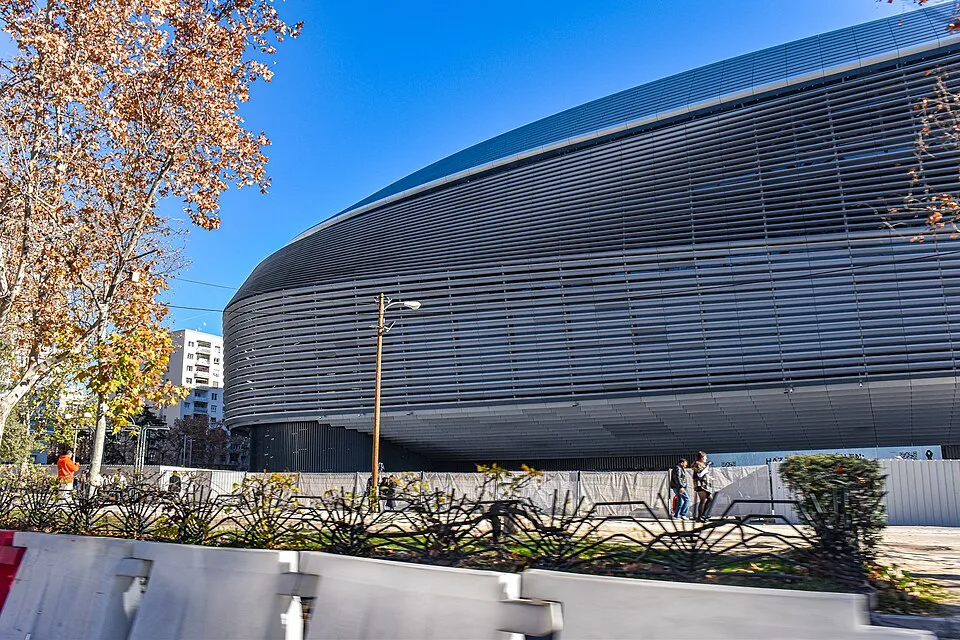
The club’s home moved through iterations until the Santiago Bernabéu became synonymous with big-match economics—capacity, hospitality tiers, naming rights, tourism tours, and rebuild cranes all belong to the same spreadsheet story. Stadium redevelopment is not cosmetic: it changes matchday revenue, scheduling, and how Madrid sells itself during summers without trophies.
Bernabéu himself—club president during formative decades—symbolises an executive-driven model: infrastructure first, then recruitment theater. Contemporary iterations repeat that recipe with digital signage and premium seating chasing the same euros rival giants chase.
European nights as the club’s real brand engine
Domestic consistency matters, but Madrid’s global imprint rises with European Cup / UEFA Champions League folklore—comebacks, controversial decisions, goalkeepers as villains or heroes, and managers hired to survive knockout margins. Spanish league narratives reward patience; European narratives reward myth-making on single evenings.
El Clásico against Barcelona layers politics, aesthetics, and wage inflation into two fixtures per season that outperform most clubs’ annual marketing budgets. Derbies against Atlético Madrid add city geography—north versus south sensibilities—even when league tables diverge.
Timeline — milestones still cited in searches
No single list satisfies every fan; cup nomenclature changes with eras. Use this as orientation, then verify season-by-season totals from official or league sources before arguing in group chats.
- 1902 — Club founded; early Madrid football identity takes shape.
- 1920 — Royal patronage and the Real designation enter the formal name.
- 1947 — New Chamartín stadium opens; seed of today’s Bernabéu footprint.
- 1950s — European Cup arrives; Madrid helps define the competition’s first glamour decade alongside legends linked to the Di Stéfano era debates historians still unpack.
- 1955–1960 — Five consecutive European Cups—a benchmark later generations invoke whenever knockout streaks appear.
- 2000 — FIFA Club of the Century recognition crystallises brand positioning for the internet era.
- 2001–2003 — Galácticos transfer theater (Zidane, Figo, Ronaldo Nazário) pairs trophies with global celebrity football economics.
- 2014 — La Décima Champions League delivers narrative closure after years of near misses.
- 2016–2018 — Three straight Champions League titles under Zinedine Zidane as coach—modern-era dynasty shorthand.
- 2022–2024 — Renewed European runs and squad renewal (Vinícius, Bellingham, Mbappé chapters) keep Madrid near the top of widely cited revenue discussions.
Snapshot — numbers readers actually compare
Totals below come from different snapshots: club revenue is tied to 2024/25 reporting cycles in euros; follower totals aggregate official club accounts across major platforms using CIES methodology as of June 2024. They are not interchangeable—one is accounting, the other is audience reach.
| Metric | Value |
|---|---|
| Total revenue (€m, 2024/25 season, widely cited annual football finance surveys) | 1,161 |
| Combined social followers (millions, official accounts on Facebook, X, Instagram, TikTok—CIES June 2024) | 411 |
Achievements and standout stats
Cup and league totals move every season—always confirm dates with official tables before quoting totals in arguments. For orientation, Real Madrid’s statistical reputation rests on a historically deep trophy cabinet in Spain plus unmatched consistency at the sharp end of European club football across decades.
Off the pitch, mega-club economics mean headline revenue and stadium investments draw as much analyst ink as expected-goals charts—both belong to the same modern story.
- European Cup / Champions League: widely cited as the most successful club in the competition’s history—multiple eras (1950s dynasty, 2014 La Décima, 2016–2018 three-peat, continued runs in the 2020s) anchor that claim.
- Spanish league: record number of La Liga titles among clubs—domestic consistency remains the baseline expectation every August.
- FIFA recognition: Club of the Century designation (2000) formalised a brand already built on European nights.
- Bernabéu scale: home capacity after major renovation is quoted in the low eighty-thousands seats—among Europe’s largest football venues by seating.
- Commercial and audience scale: major football finance surveys and social-audience studies routinely place Madrid among the very largest clubs on both revenue and combined platform followers—the figures in the snapshot table above are consistent with that tier.
Bottom line
Real Madrid’s story is stadium economics plus knockout mythology plus presidential theater. Hold history, reported revenue, and digital reach as separate lenses—or debates talk past each other. Next season’s accounts may rewrite every figure except the expectation that Madrid competes late in Europe.